
Explainer
Watch lume explained: Super-LumiNova, tritium, radium and how a watch glows in the dark
What lume is, how Super-LumiNova stores and releases light, what C3, BGW9, X1 and X2 mean, how long lume glows, and how radium and tritium came before it, from the makers’ own pages.
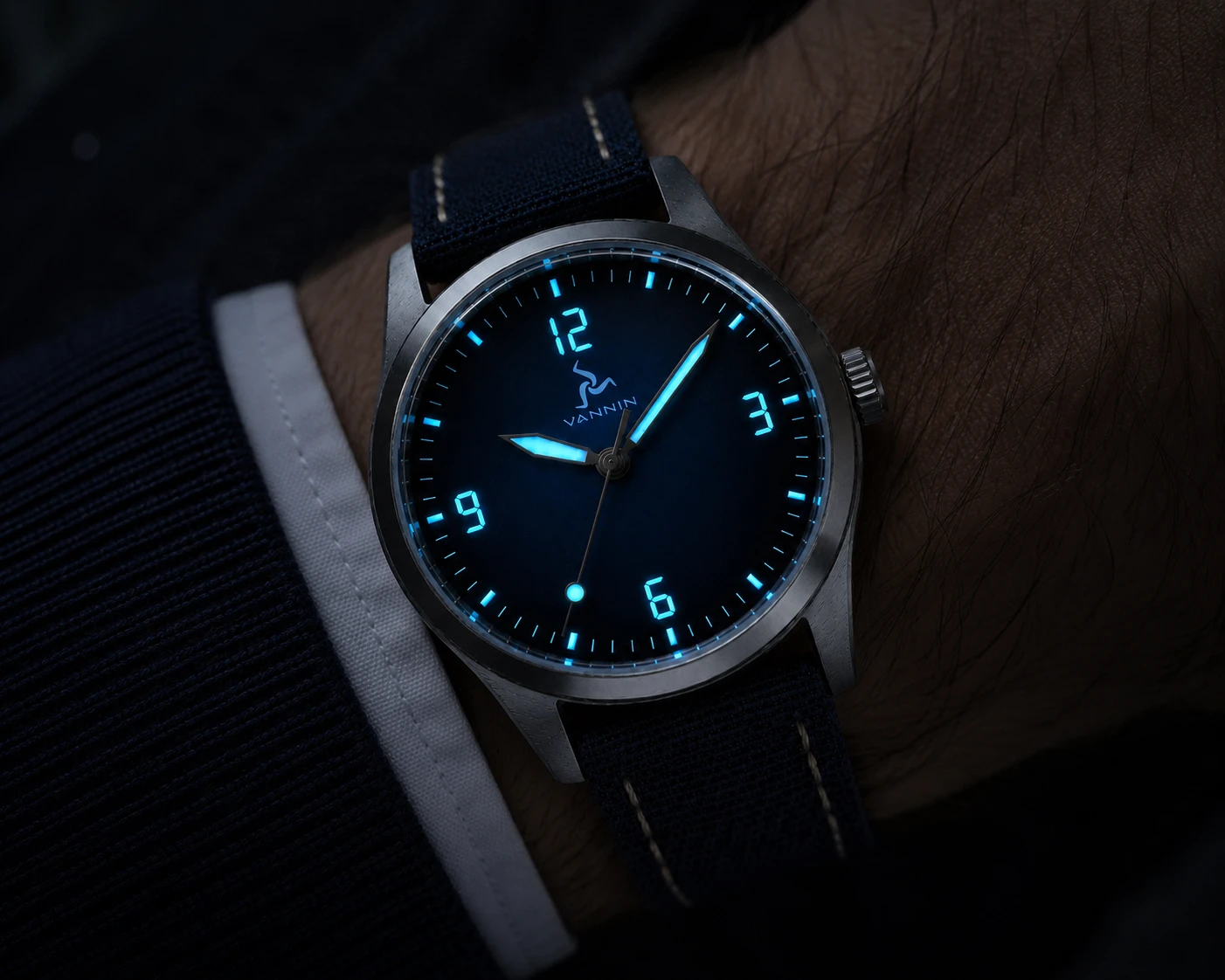
Watch lume is the luminous material on a watch’s hands and markers that lets you read the time in the dark. On watches made today it is almost always a pigment such as Super-LumiNova, which stores light and gives it back over some hours. Older watches used radioactive paint: first radium, then tritium.
We read the pigment makers’ own pages (RC Tritec, Nemoto and mb-microtec), Seiko’s page on its own luminous paint, the US Environmental Protection Agency, Wikipedia and two accounts of the Smiths W10, all last checked 18 November 2026. We tested nothing and measured no glow. Figures are the makers’ own and are attributed to them.
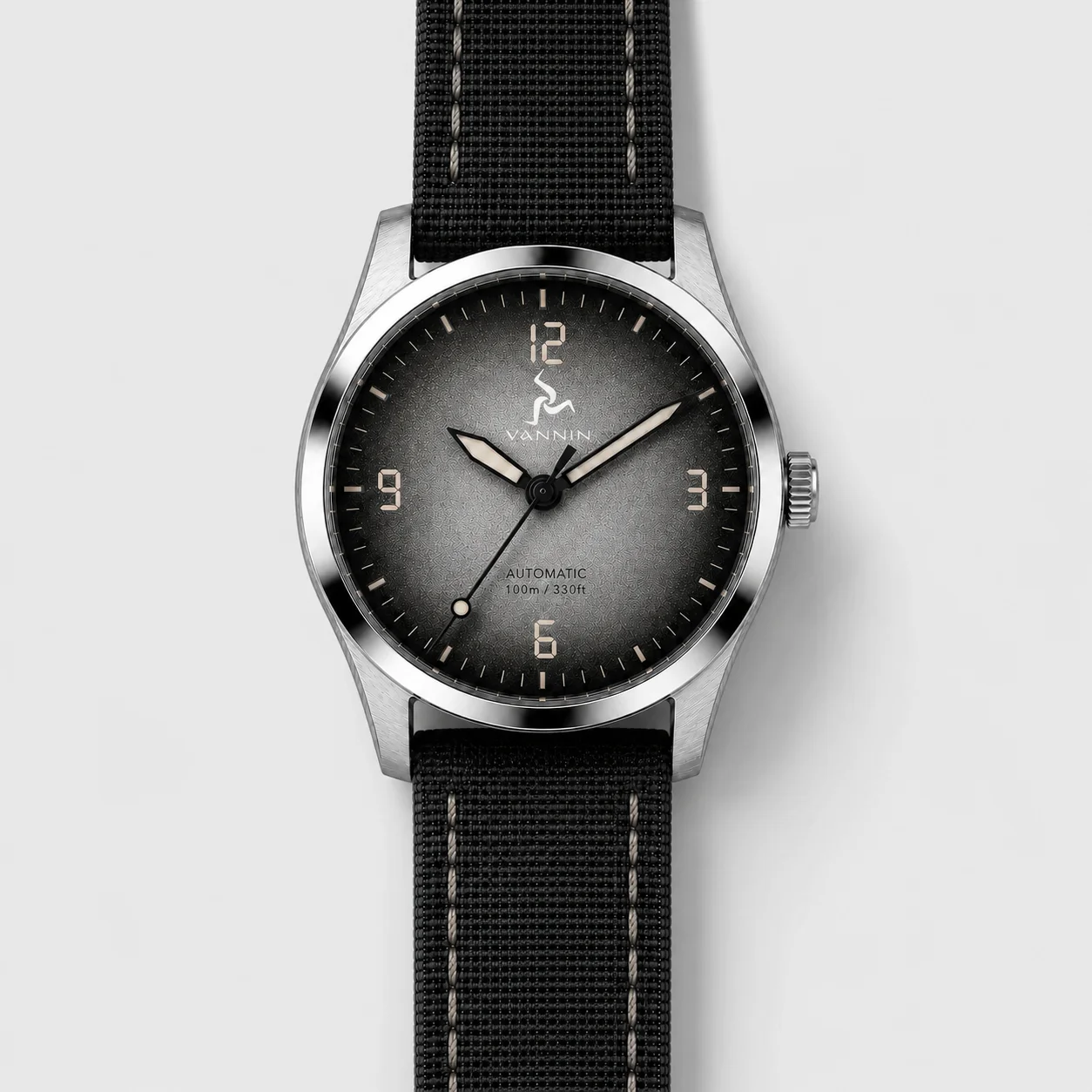
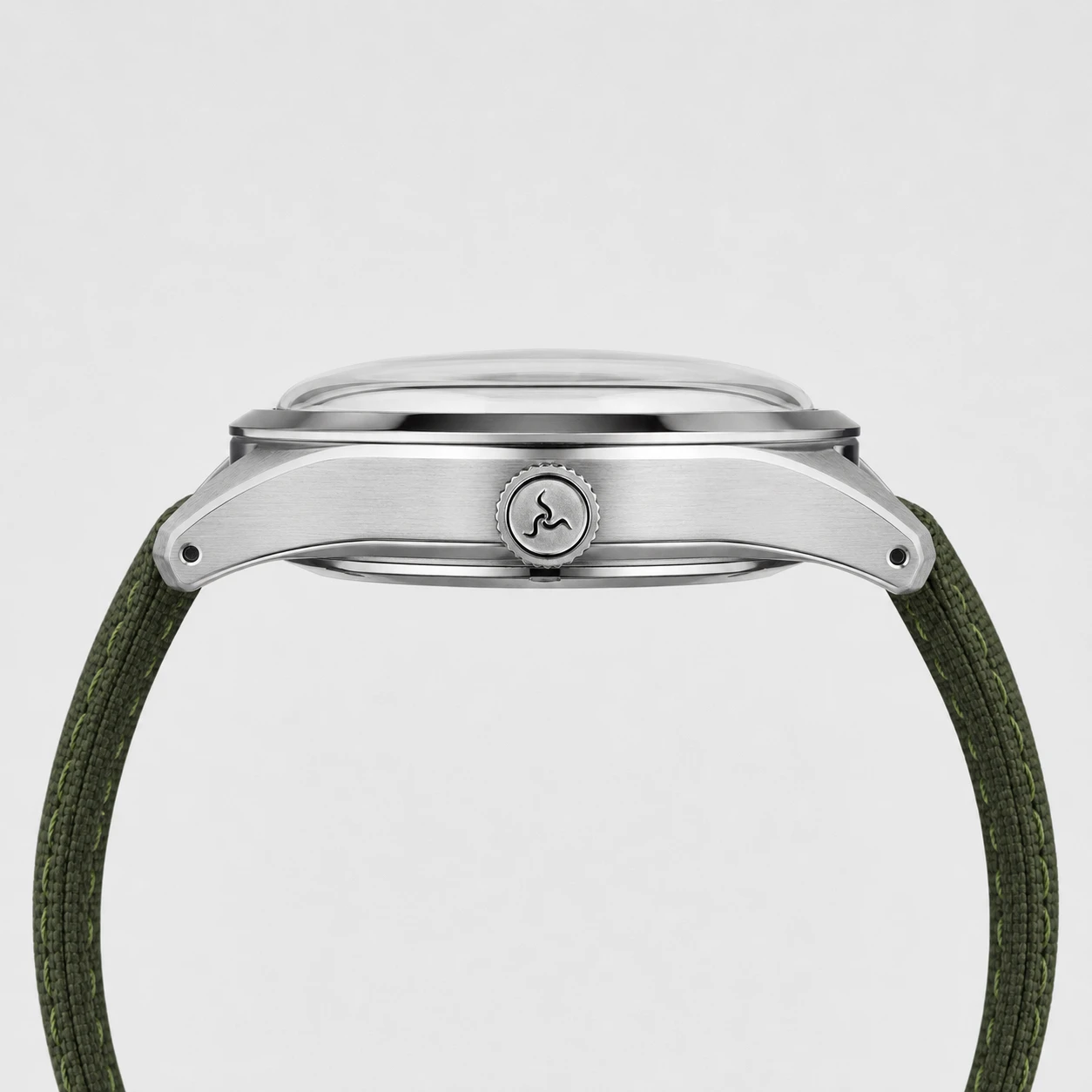
Disclosure: we are Vannin Watches, a Manx brand designed on the Isle of Man. The Vannin Field Watch has luminous hands and markers, and the last section repeats exactly what its product pages say about them and no more. We have no connection with any maker named here.
Lume is short for luminous material. There are two kinds, and they work in different ways.
- Photoluminescent lume stores light and releases it afterwards. It needs light first and fades through the night. Super-LumiNova, LumiNova and Seiko’s LumiBrite are of this kind.
- Radioluminescent lume makes its own light, because a radioactive material excites a coating that glows. It needs no light first. Radium paint, tritium paint and tritium gas tubes are of this kind.
The US Environmental Protection Agency defines radioluminescence as the emission of light from objects containing radioactive material, and says glow-in-the-dark paint is now made without it.
Super-LumiNova is the brand name of a pigment made by RC Tritec in Switzerland. RC Tritec’s own history describes it as a ceramic afterglow pigment based on strontium aluminate doped with rare earth elements, which stores light and releases it as visible light with a time delay. The company says it developed the pigment in the early 1990s to replace tritium paint, which was still radioactive.
The underlying invention came from another company. Nemoto & Co. says it invented LumiNova, a series of long-afterglow pigments, in 1993, and that it glows ten times brighter and ten times longer than the zinc sulphide pigments used before. Wikipedia’s article on Super-LumiNova says Nemoto and RC Tritec formed a joint venture in 1998 to make the pigment in Switzerland under the Super-LumiNova name.
In plain terms it behaves like a small rechargeable light store. Wikipedia says the pigment is charged by light with wavelengths of 200 to 450 nanometres, which covers ultraviolet and the blue end of visible light, and that the charge-and-glow cycle can be repeated again and again.
Two colour codes appear on most specification sheets, and one or two grade names. Table 1 sets out what each means, as the sources describe it.
| Name | What it is | What the source says | Source |
|---|---|---|---|
| C3 | A colour | Pale yellow-green in daylight; glows green, emitting at 515 nm | Wikipedia |
| BGW9 | A colour | White in daylight; glows blue-green, emitting at 485 nm; the second brightest after C3 | Wikipedia |
| Standard, A and X1 | Grades | Similar brightness at first; the A and X1 grades fade more slowly, X1 the slowest of the three | Wikipedia |
| X2 | A grade | Up to 87% better performance than X1 after 60 minutes, depending on the pigment’s body colour | RC Tritec |
Wikipedia adds that every colour other than C3 is made by adding colourants, which absorb some light and so reduce how much the pigment can store and give back. Our view: that is why a watch with white or coloured lume can glow less than one with pale green lume, even when both use the same grade.
It depends on the pigment, how thickly it is applied and how much light it had first, so no single figure is right for every watch. One maker does publish a figure for its own paint. Seiko says LumiBrite reaches full brightness after about 10 minutes of sunlight or artificial light of more than 500 lux, and then lasts about 3 to 5 hours in the dark.
Wikipedia says that large, thickly applied Super-LumiNova markings remain visible to dark-adapted eyes for the whole night, while fading all the time. Both statements describe a glow that is brightest in the first minutes and then falls away. Neither is a promise for any other watch.
Lume of this kind does not run out with age in the way a battery does. Seiko says LumiBrite is made of inorganic material and can be used semi-permanently. Tritium is different, as the next section explains.
Some watches use tiny glass tubes of tritium gas in place of paint. mb-microtec, the Swiss company behind the trigalight brand, describes a hollow glass body that is coated on the inside, filled with tritium and hermetically sealed. Electrons from the decaying tritium strike the coating and make it glow, with no charging from outside. The company gives tritium’s half-life as 12.3 years, so a tube gives about half its original light after that time. That last step is our arithmetic.
The first luminous watch dials used radium. The EPA says radium paint was used on watch and clock dials from the early 1900s, that the dial painters who pointed their brushes with their lips swallowed it and many developed bone cancer, and that by the 1970s radium was no longer used on watch and clock dials. The agency gives radium-226 a half-life of 1,600 years, and says antiques containing radioactive material can go on emitting very low levels of radiation for thousands of years.
Tritium paint came next. RC Tritec says it moved from radium to tritium after radium proved harmful, and that in 1961 it was the first maker licensed to import tritium-activated luminous material into the American watch market. Military watches of the period show it on the dial: the Smiths W10 issued to the British Army carries a circled T for tritium, according to Worn & Wound, and Waecce says the tritium on those watches has aged to a creamy yellow. CWC, which supplies British forces, lists the move from tritium to modern luminous materials among its developments since 2000. Our history of British Army watches covers those markings.
If you own an old watch with radium lume, the EPA’s advice is short: do not attempt to take apart radium watches or instrument dials, and such antiques are usually not a health risk as long as they are intact and in good condition. A watchmaker who works on vintage watches is the right person to ask.
- Any bright light charges photoluminescent lume. Seiko’s figure for its own paint is about 10 minutes at more than 500 lux.
- It needs no battery and has no switch. It glows whenever it has been charged and the surroundings are dark.
- It fades through the night. Expect it to be brightest just after the light goes.
- It is not a torch. Its job is to show where the hands are.
The first point is Seiko’s and the rest are our plain summary of the sources above. Lume is one item on the list of things that make a field watch readable; our guide to what a field watch is has the rest, and our guide to sapphire crystal and mineral glass covers the glass that sits over it.
The Field Watch is available to pre-order. Its product pages say three things about its lume, and we add nothing to them here.
- The hands and markers are illuminated, to support readability after dark.
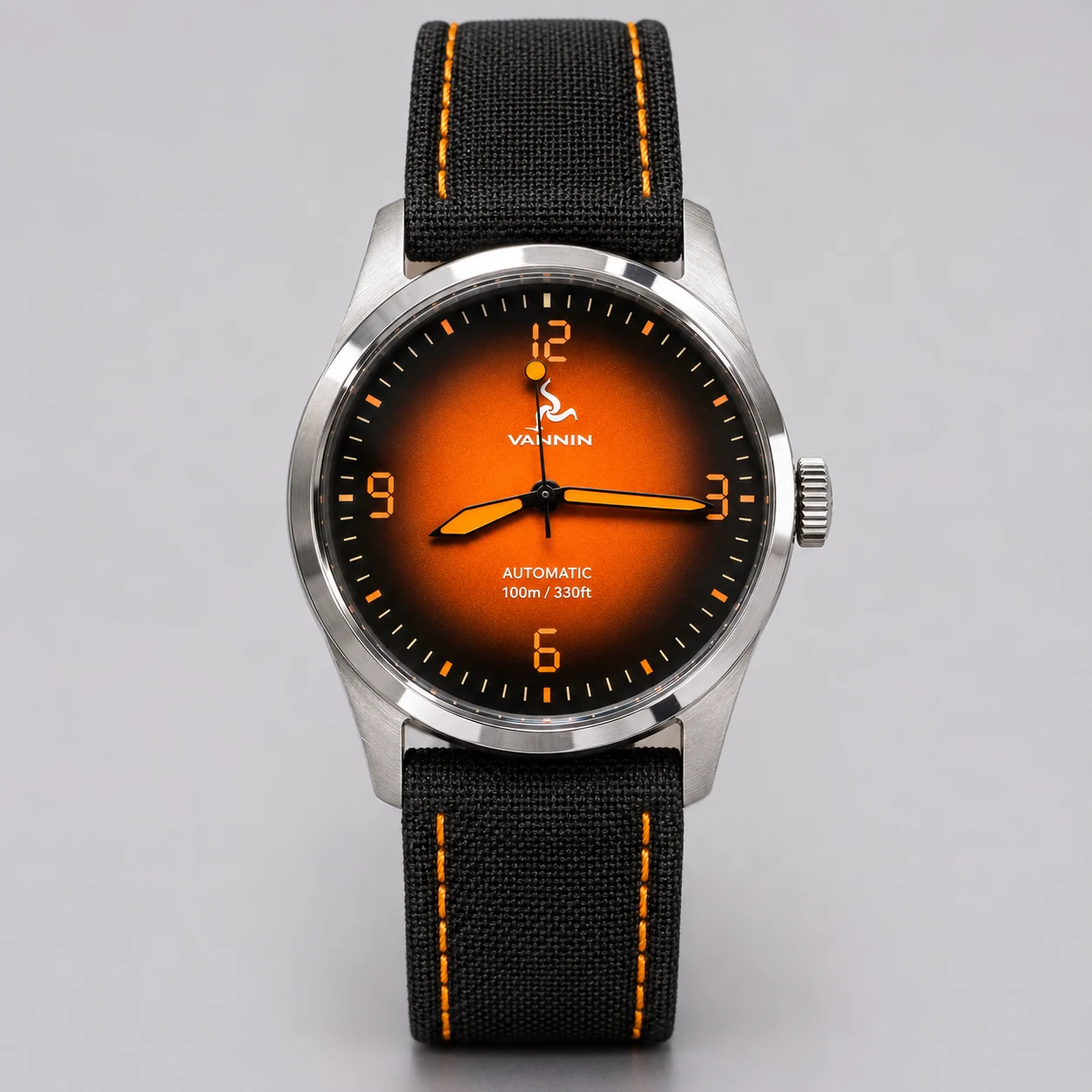
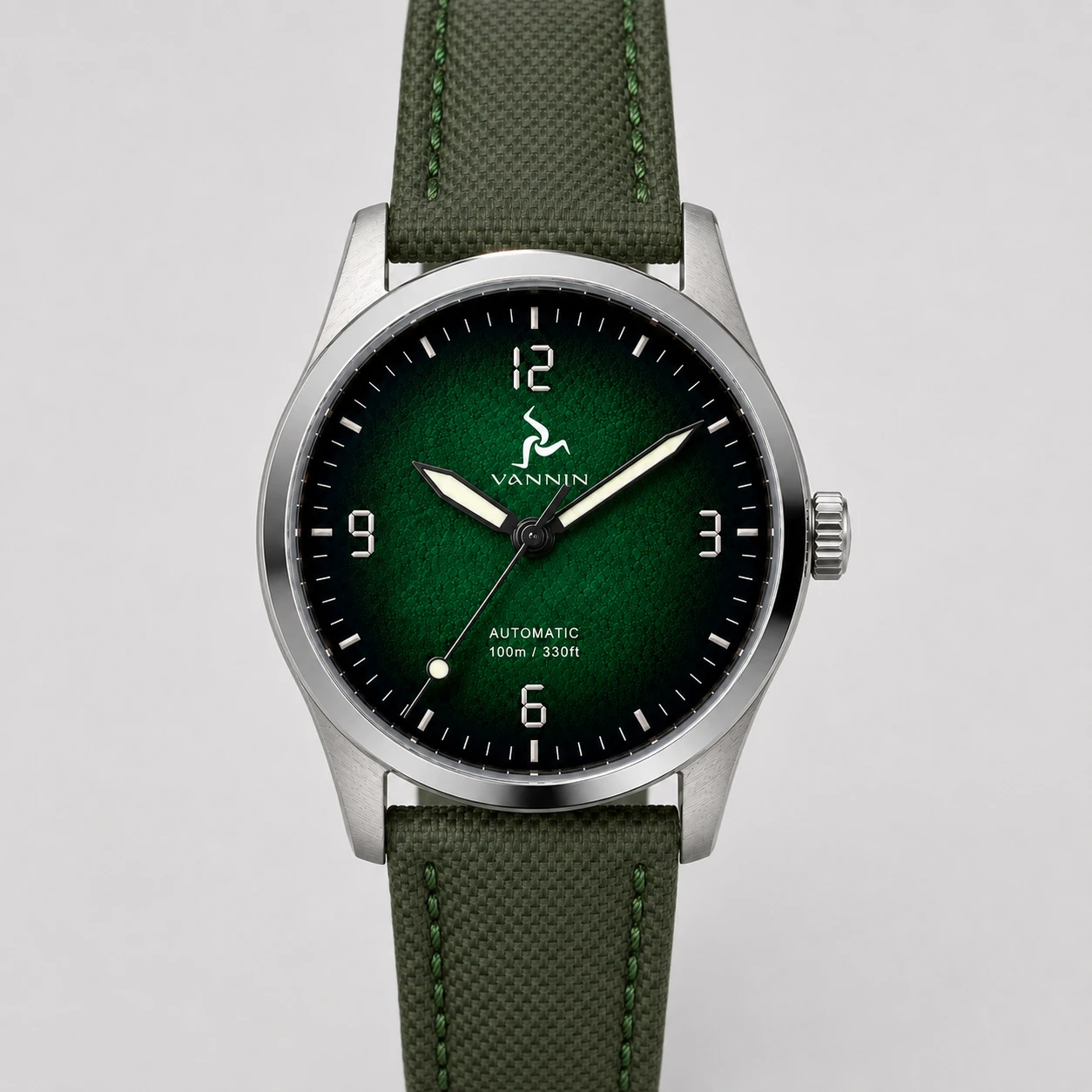
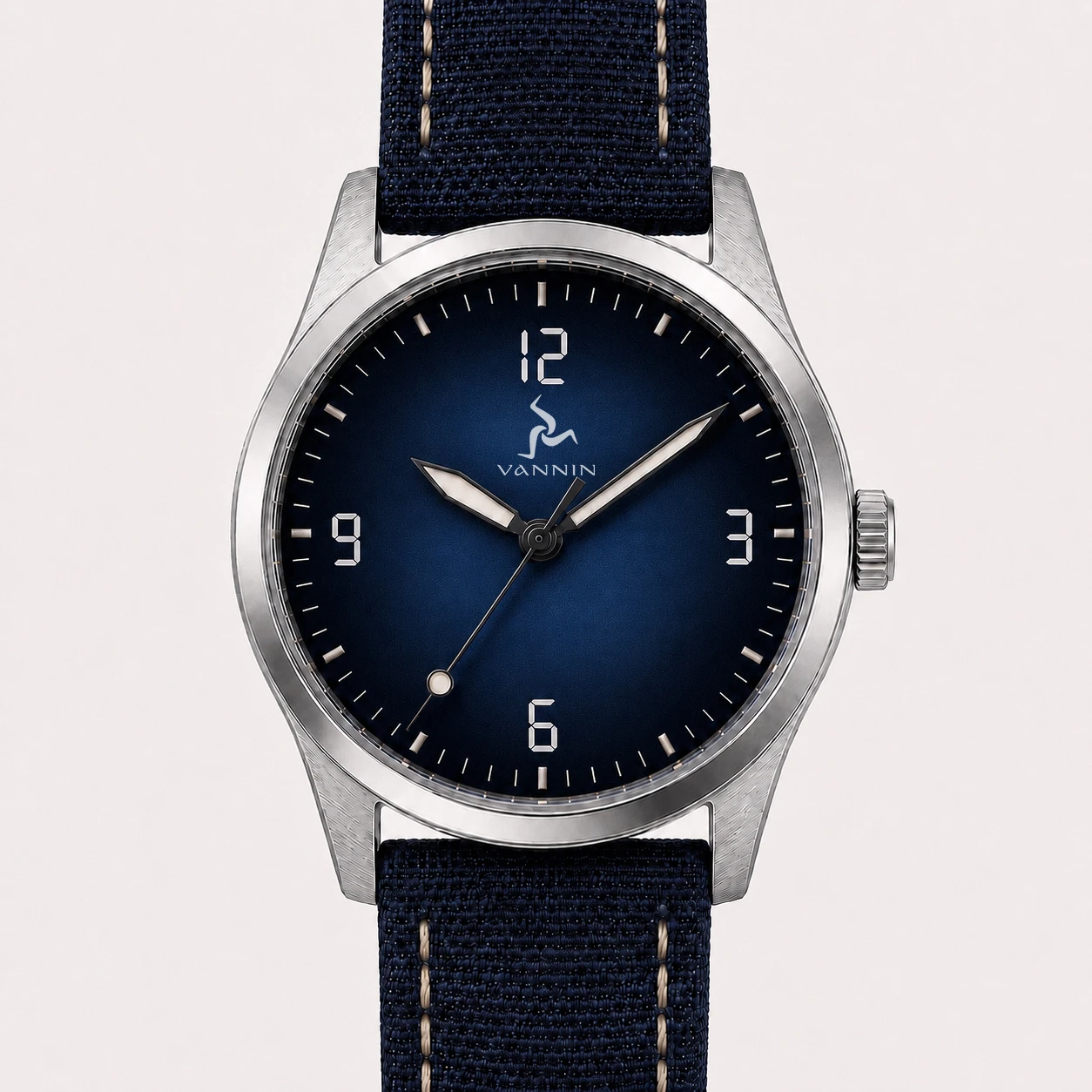
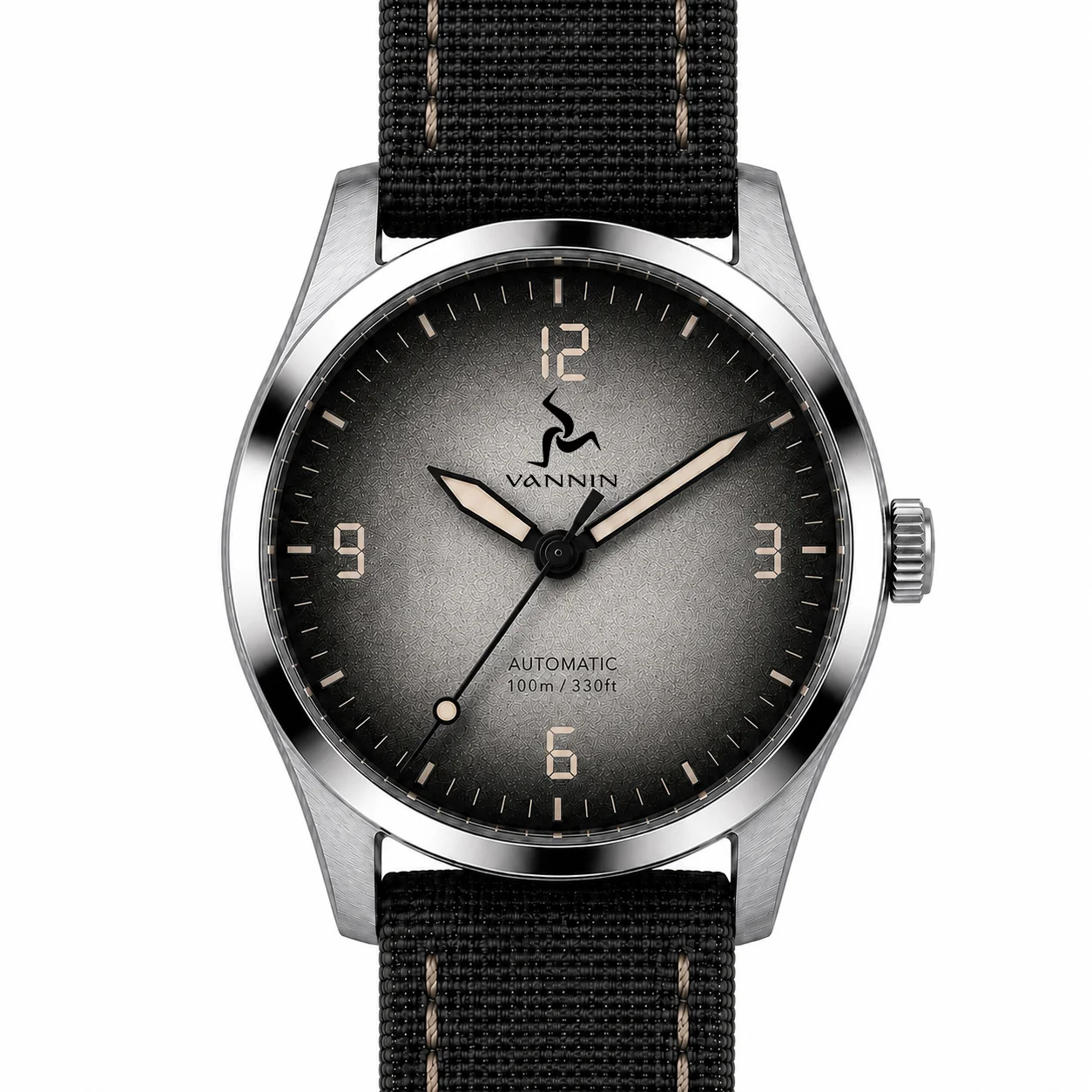
- The lume colour is listed as green for Mountain Green, blue for Irish Sea Blue and white for Manannán’s Cloak Grey.
- No lume colour is listed for Western Sky Orange.
The pages do not name the pigment, its grade or how long it glows, so neither do we. The picture at the top of this page is one of the product photographs of the Irish Sea Blue watch in the dark.
What is lume on a watch?
Lume is the luminous material applied to a watch’s hands, markers and sometimes its bezel so the time can be read in the dark. Most watches made today use a photoluminescent pigment that stores light and releases it over some hours. Some use sealed tubes of tritium gas, which glow without being charged.
Is Super-LumiNova radioactive?
No. RC Tritec, which makes it, says it developed the pigment in the early 1990s as an alternative to tritium paint, which was still radioactive, and describes it as a ceramic pigment based on strontium aluminate. Wikipedia describes Super-LumiNova as non-radioactive. It glows by storing light and releasing it, not by radioactive decay.
How long does Super-LumiNova last?
Through the night in a fading form, by Wikipedia’s account: large, thickly applied markings stay visible to dark-adapted eyes all night while dimming. We found no single maker’s figure in hours for Super-LumiNova. For its own LumiBrite paint, Seiko gives about 3 to 5 hours after 10 minutes of light above 500 lux.
What is the difference between C3 and BGW9 lume?
They are two Super-LumiNova colours. Wikipedia describes C3 as pale yellow-green in daylight with a green glow, and BGW9 as white in daylight with a blue-green glow. It calls C3 the brightest and BGW9 the second brightest. The choice is partly about looks: BGW9 reads as white on the dial by day.
Does watch lume wear out?
Photoluminescent lume does not run out in the way a battery does. Seiko says its LumiBrite paint is made of inorganic material and can be used semi-permanently. Tritium is different: mb-microtec gives its half-life as 12.3 years, so by our arithmetic a tritium tube gives about half its original light after that time and goes on dimming.
Is an old watch with radium lume dangerous?
The US Environmental Protection Agency says radioactive antiques are usually not a health risk as long as they are intact and in good condition, and that you should not attempt to take apart radium watches or instrument dials. Radium-226 has a half-life of 1,600 years, so an old dial stays radioactive. Ask a watchmaker who handles vintage watches.
About the author: Andrew Pickett is a founder of Vannin Watches, with Peter Jones. Vannin Watches Limited is registered on the Isle of Man, where its first watch, the Field Watch, was designed. Andrew compiled this guide from the published sources listed below; we have not tested any of the materials or watches it mentions.
Sources and pages read
- RC Tritec: company history
- RC Tritec: Swiss Super-LumiNova
- Nemoto & Co.: phosphorescent pigments
- Wikipedia: Super-LumiNova
- Seiko: LumiBrite
- mb-microtec: trigalight
- US Environmental Protection Agency: radioactivity in antiques
- US Environmental Protection Agency: radionuclide basics, radium
- Worn & Wound: Time Spec, Smiths W10 (24 May 2016)
- Waecce: the history of the Smiths W10 field watch (6 August 2022)
- CWC: history