
Explainer
British Army watches: the Dirty Dozen, the W10 and the history of the issue field watch
From the ATP watches of 1939 to the twelve W.W.W. watches collectors call the Dirty Dozen, the Smiths, Hamilton and CWC W10 and the quartz G10: the history of British Army issue watches, with the points where the sources disagree.
British Army issue watches run in a line from the Army Trade Pattern watches of 1939, through the twelve W.W.W. watches of 1945 that collectors call the Dirty Dozen, to the W10 of the 1960s and 1970s and the quartz G10 of 1980. Each was built to a government specification, and the sources disagree on several details.
We read three makers’ own histories (CWC, Timor and Vertex) and published accounts by Hodinkee, Time+Tide, Monochrome, Worn & Wound, anOrdain, Waecce, CWC Addict and Wikipedia, all last checked 18 November 2026. We handled no watch and consulted no archive. Where the sources disagree we give both sides and say who says what. For what a field watch is and how to choose one, read our guide to what a field watch is, which this page does not repeat.
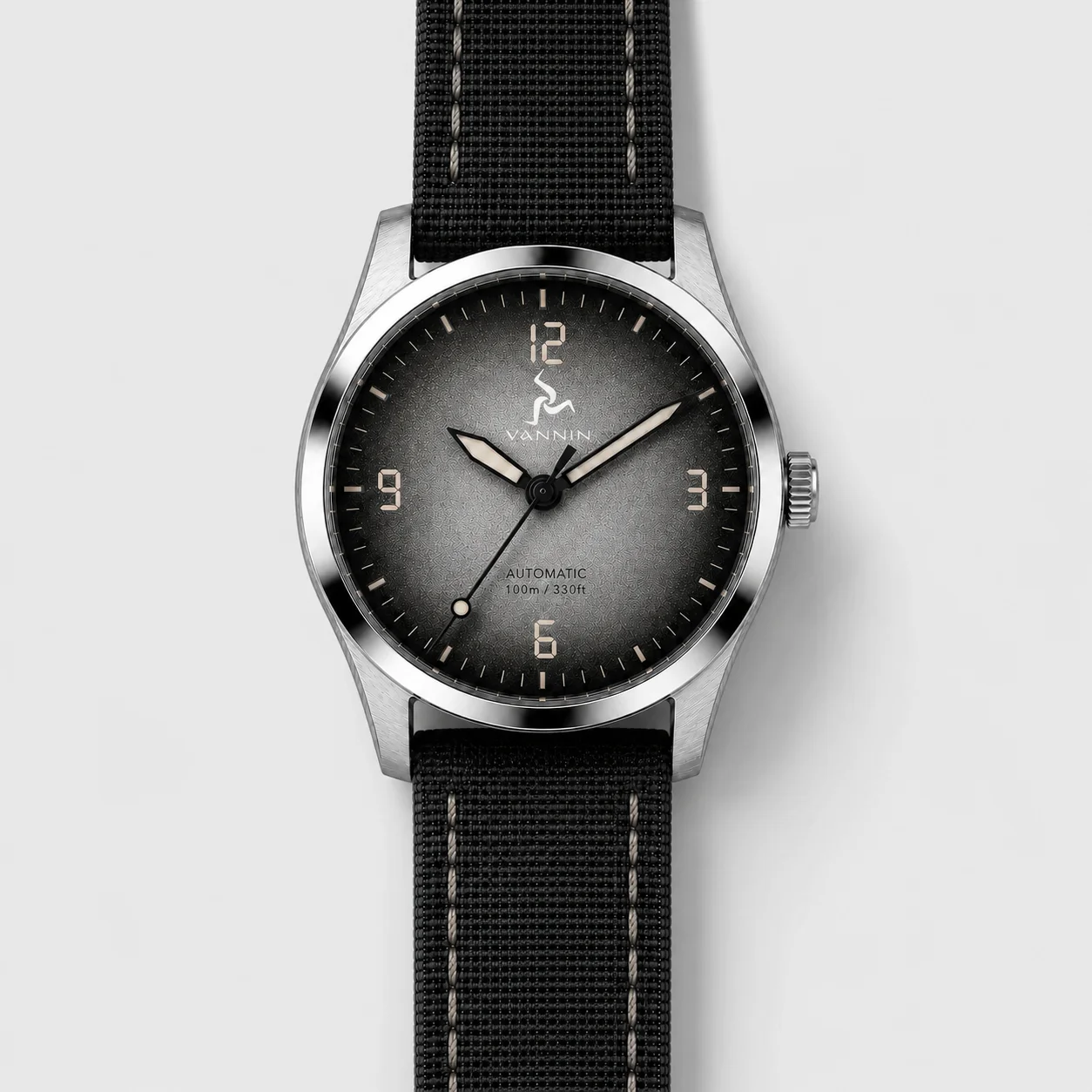
Disclosure: we are Vannin Watches, a Manx brand designed on the Isle of Man, and none of this history is ours. The Vannin Field Watch is a new civilian watch that has never been issued to anyone, and we have no connection with any maker named here.
An issue watch is one the government bought to a written specification and marked as its property. The mark is the broad arrow, or pheon, which Worn & Wound describes as the official mark of property issued by the British government, in use since the 17th century. The case back carries a code for the service. anOrdain’s history of British military watches says W10 denotes Army issue, 0552 the Royal Navy and 6BB the Royal Air Force.
A watch sold to the public in the same style is not an issue watch, however close it looks. That is the difference between a military watch and a military-style watch, and it is why collectors read case backs before dials.
The Army’s first standard wristwatches of the Second World War were the Army Trade Pattern watches, marked ATP. Timor’s own history says the Army acquired them from many brands at the start of the war, and that they were often civilian watches slightly modified to meet a hurried specification. Wikipedia’s article on the W.W.W. watches says the Ministry of Supply bought watches made for the civilian trade and had them engraved ATP.
Time+Tide puts it more strongly. It says 17 Swiss makers were contracted to an ATP specification, that 133,600 watches were supplied, and that most cases were 31 mm across with 15-jewel movements. It also argues the ATP did the wartime work, because the W.W.W. watches arrived so late. That is one publication’s account, and it differs from the others on how purpose-built the ATP watches were.
W.W.W. stands for Watches, Wristlet, Waterproof. Wikipedia gives the specification as R.S./Prov/4373A and says it was formally approved in 1945, with makers invited to supply watches to it from 1943. Hodinkee lists what it asked for: a black dial, Arabic numerals, luminous hands and hour markers, a railroad minute track, a shatterproof crystal, a stainless-steel case and a 15-jewel movement, regulated to chronometer standards and both waterproof and shockproof.
The watches came from twelve makers, here in alphabetical order: Buren, Cyma, Eterna, Grana, IWC, Jaeger-LeCoultre, Lemania, Longines, Omega, Record, Timor and Vertex. “Dirty Dozen” is the collectors’ name for the set and came later. Time+Tide notes that at the time they were known simply as W.W.W.
| Maker | Watches delivered, per Wikipedia’s table | Another source |
|---|---|---|
| Buren | 11,000 | No other figure found |
| Cyma | 20,000 | No other figure found |
| Eterna | 5,000 | Monochrome: relatively few |
| Grana | 1,000 to 5,000 | Monochrome: relatively few |
| IWC | 5,000 | Hodinkee: 6,000, from the maker’s own record |
| Jaeger-LeCoultre | 6,000 | Hodinkee: 10,000, from the maker’s own record |
| Lemania | 10,000 | No other figure found |
| Longines | 8,000 | No other figure found |
| Omega | 25,000 | Hodinkee: 25,000, from the maker’s own record |
| Record | 25,000 | No other figure found |
| Timor | 13,000 | No other figure found |
| Vertex | 15,000 | Monochrome, citing Konrad Knirim’s book: 15,000 |
The totals do not agree either. Hodinkee says about 150,000 watches, and adds that the Ministry of Defence has released no official numbers and that only IWC, Jaeger-LeCoultre and Omega kept a strict record. Monochrome says about 145,000. Our arithmetic on Wikipedia’s column gives 144,000 to 148,000, depending on the figure taken for Grana. Grana’s is the smallest number in every account, which is why collectors treat it as the hardest of the twelve to find.
The sources disagree, and we cannot settle it. Vertex’s own timeline says it began large-scale production of its W.W.W. watch in 1944 and that 4,652 were delivered during the preparations for D-Day. Vertex also calls itself the only British-based maker among the twelve.
Time+Tide says the opposite of the popular picture: that there are only a few rare reports of W.W.W. watches in late 1944, that most were not supplied until 1945, and that those issued went mainly to officers and to staff in engineering and communications roles. Hodinkee says the watches reached Britain in the second half of 1945 and were issued to special units, including radio operators and artillery staff. Wikipedia says most were delivered from May 1945 onwards, mostly to troops in the Far East, with some as early as 1944.
Waecce’s history of the Smiths W10 says Smiths won the Ministry of Defence contract in 1966 and made the watch from 1967 to 1970. It describes a 35 mm steel case with a 47 mm lug-to-lug, a domed acrylic crystal, tritium paint on the hands and minute track, and a broad arrow above 6 o’clock. Worn & Wound notes the words “MADE IN ENGLAND” on the dial. A short case with long lugs is a pairing our guide to watches for small wrists comes back to.
Waecce calls it the last British-made mechanical watch issued to British forces. anOrdain’s writer says it was the only British military issue watch produced entirely in the UK, as far as the writer is aware. Both are careful claims by enthusiasts, not official statements, and we repeat them as such.
anOrdain says Hamilton’s W10 succeeded the Smiths and was issued from 1973 to 1976: a hand-wound watch with hacking seconds in a one-piece tonneau case, issued to all three services. CWC’s own history says its founder, Ray Mellor, had been managing director of Hamilton UK, and set up the Cabot Watch Company to go on supplying the Ministry of Defence when Hamilton ceased UK operations in the early 1970s. Its early issue models included the W10.
The collectors’ site CWC Addict says about 24,000 CWC watches were issued by the Army in 1976, 1977, 1979 and 1980, of which 10,000 were issued in 1976, and that the tonneau case followed a Defence Standard published in 1971.
CWC says that in 1980 it supplied the first quartz watch issued to British forces, the G10. anOrdain’s third part says the specification was a Ministry of Defence document of that year, Defence Standard 66-4. On numbers, CWC’s G10 page gives what it calls a conservative figure of over 200,000 made for the military, worked out as 10,000 a year over 28 years. anOrdain estimates 200,000 issued from 1980 to 2006. CWC says it still supplies analogue watches to British forces.
| When | Watch | What the source says | Source |
|---|---|---|---|
| 1939 to 1945 | ATP (Army Trade Pattern) | Bought from many makers at the start of the war; 133,600 supplied by 17 makers in one account | Timor; Time+Tide |
| 1945, some reported in 1944 | W.W.W., the Dirty Dozen | Twelve makers; about 145,000 to 150,000 watches | Monochrome; Hodinkee |
| 1967 to 1970 | Smiths W10 | 35 mm, hand-wound, tritium paint, dial marked as made in England | Waecce; Worn & Wound |
| 1973 to 1976 | Hamilton W10 | Hand-wound, hacking seconds, one-piece tonneau case | anOrdain |
| 1976 to 1980 | CWC W10 | About 24,000 issued by the Army | CWC Addict |
| 1980 onwards | CWC G10 | The first quartz watch issued to British forces | CWC |
- The broad arrow: government property. On the dial and the case back of the W.W.W. watches, per Wikipedia.
- W.W.W.: the 1945 specification, engraved on the case back, per Monochrome.
- W10, 0552 and 6BB: Army, Royal Navy and Royal Air Force issue, per anOrdain.
- A circled T: tritium paint, per Worn & Wound and Waecce.
- A serial number: on the Smiths W10 its last two digits give the year of manufacture, per Waecce.
Markings can be added and parts swapped. Hodinkee says the Ministry of Defence restored watches with replacement parts, sometimes from other models, and that mistakes were made when case backs were changed. Our view: treat an issue marking as a claim to check, not a proof.
The luminous paint changed over the same years, from radium to tritium and then to pigments that are not radioactive. Our guide to watch lume explains each.
The W.W.W. brief reads like a description of the modern field watch: a dark dial, clear Arabic numerals, a minute track and luminous hands. That is our view, not a sourced claim, and our guide to field watches by budget lists current watches from their makers’ own pages. The strap that goes with the style has its own history, covered in our 20 mm strap guide.
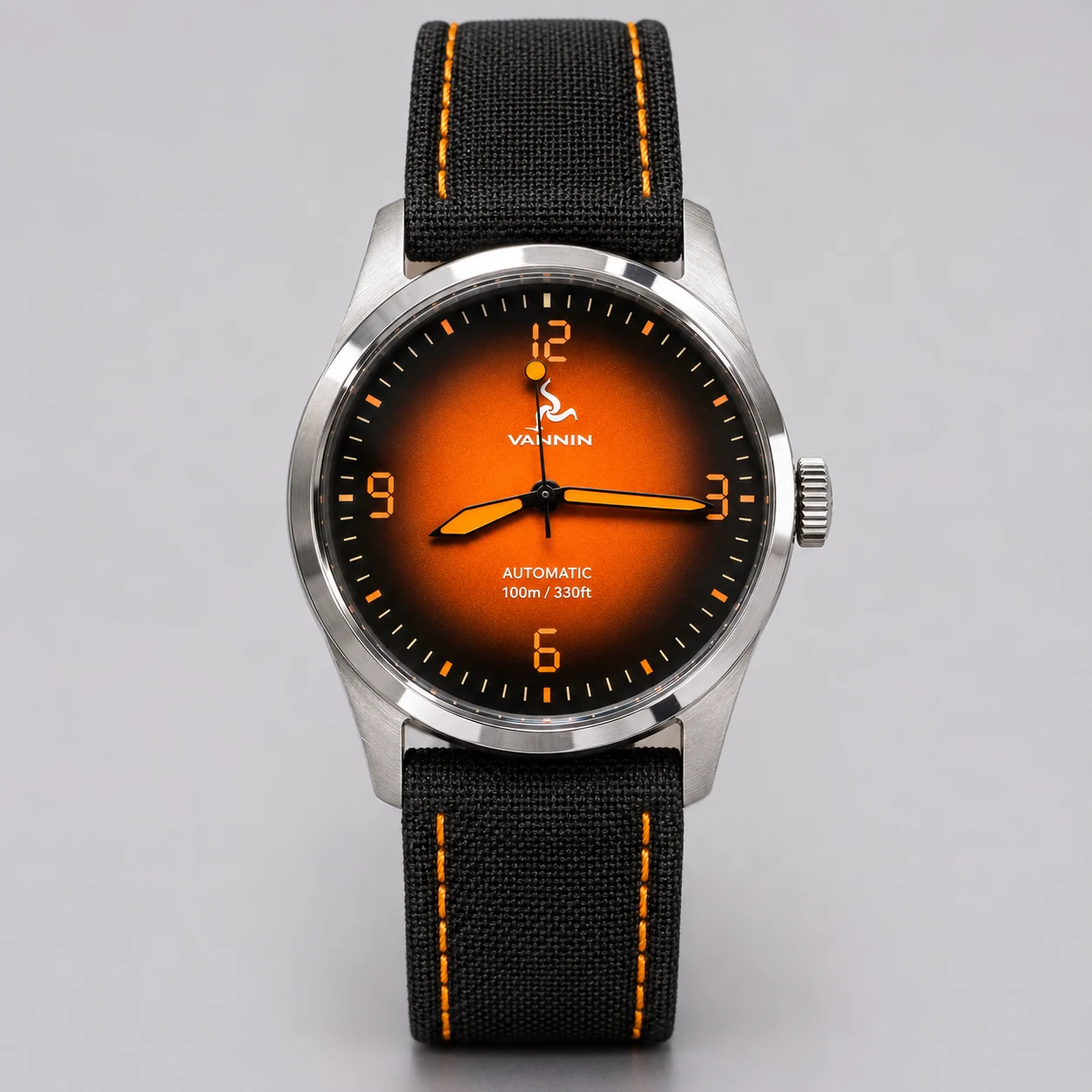
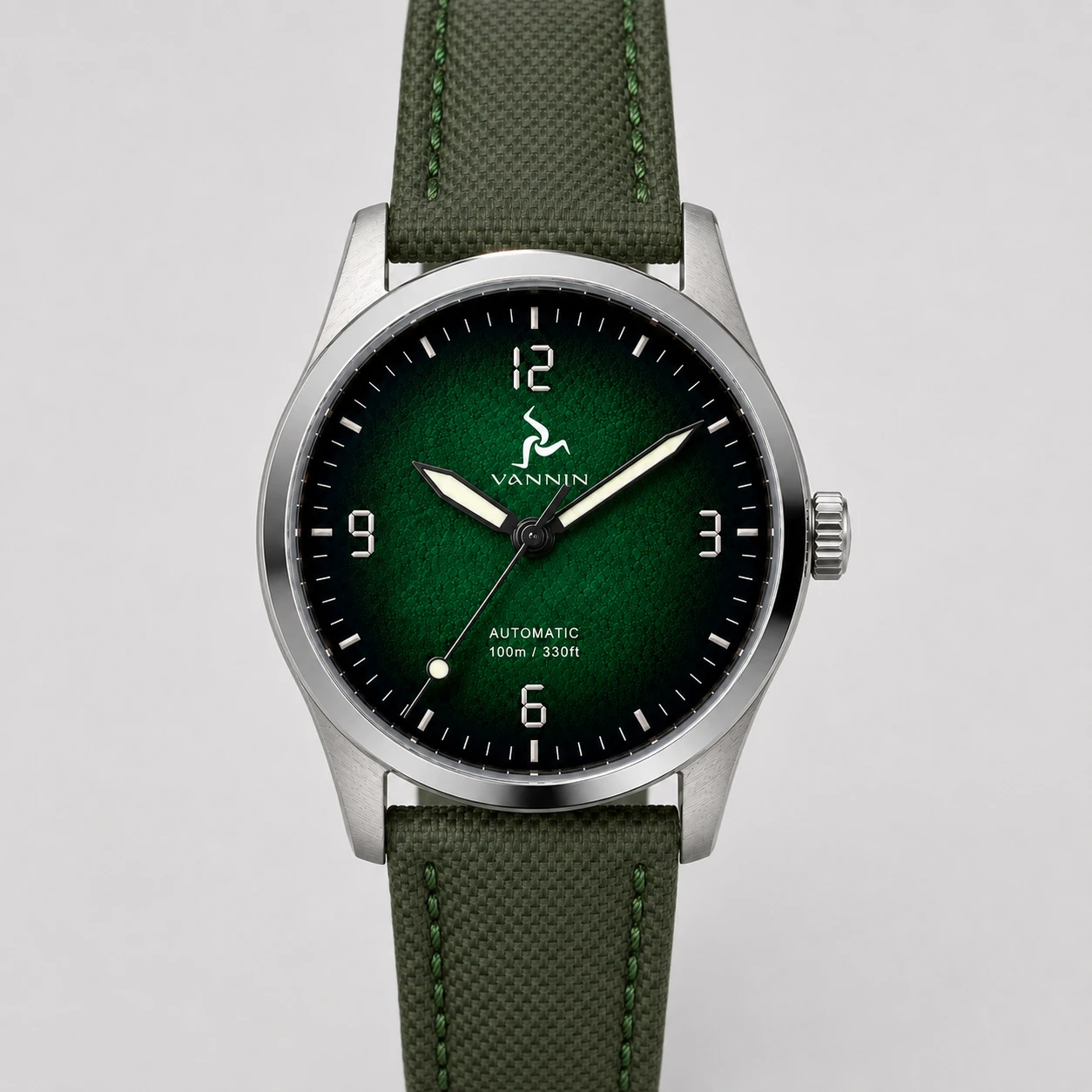
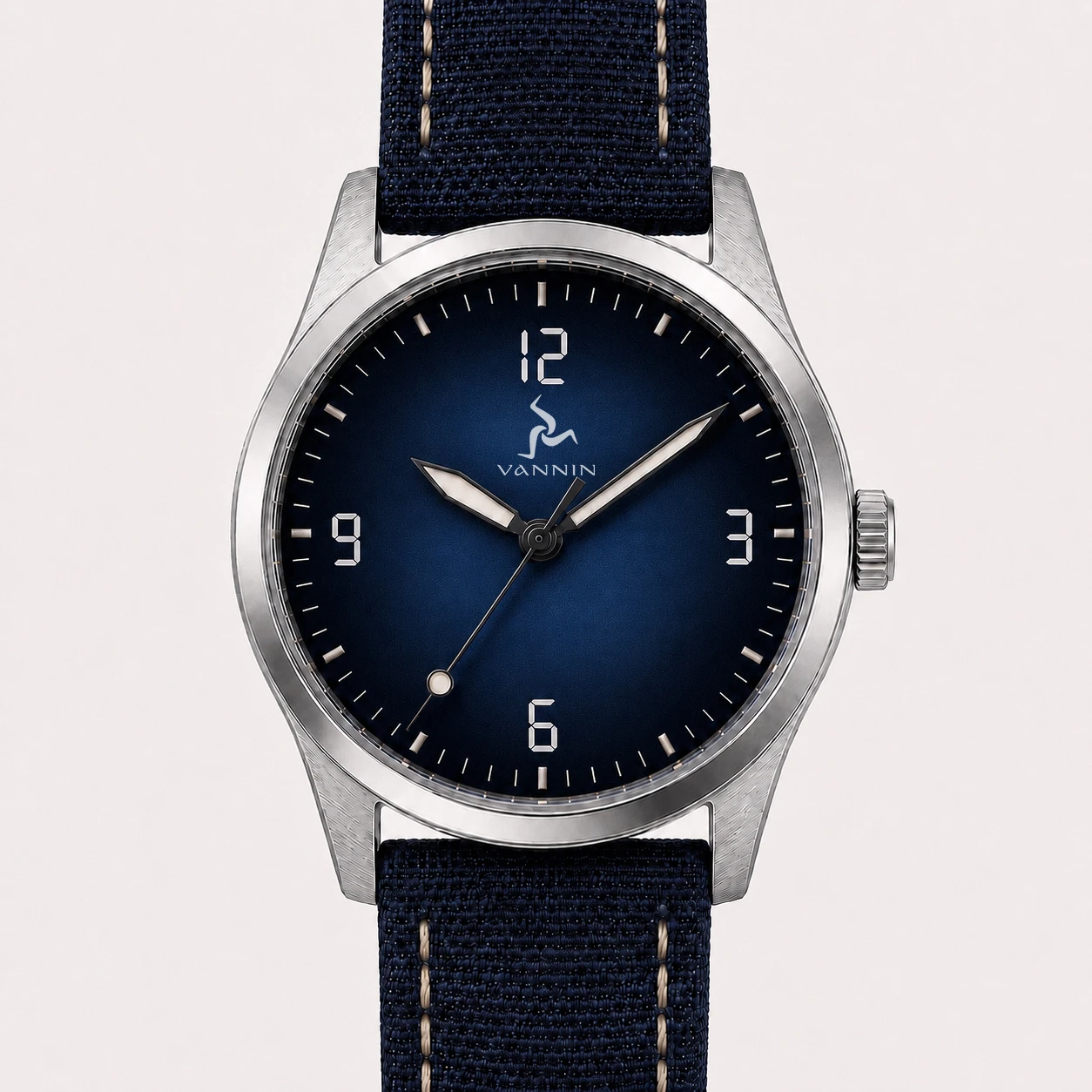
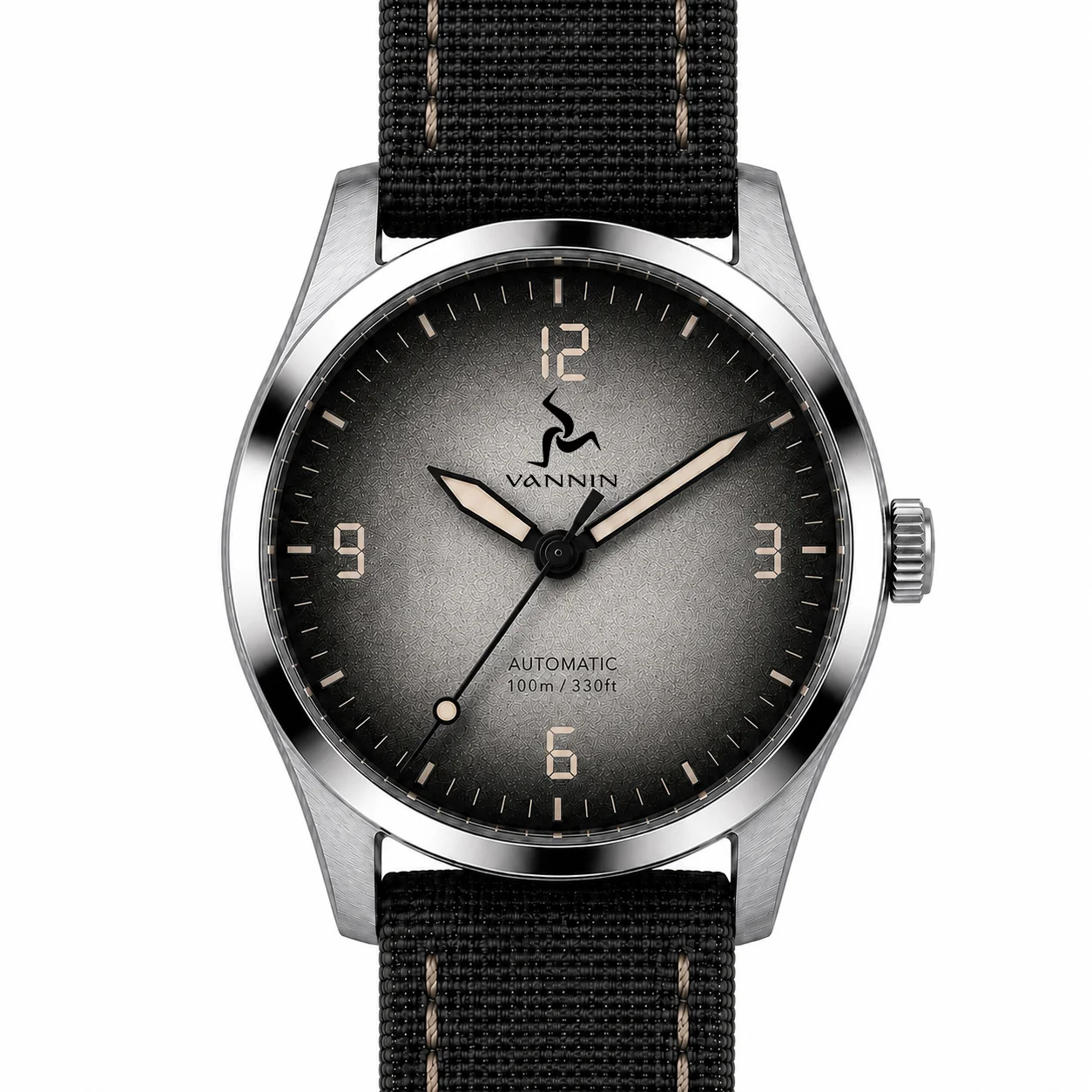
Our own watch borrows the idea and none of the history. The Field Watch is available to pre-order: a 38.0 mm steel case, a Miyota 9039 automatic movement and 100 metres (10 ATM) of water resistance. It is not a military watch, it carries no issue markings, and it is designed on the Isle of Man.
What are the Dirty Dozen watches?
They are the twelve wristwatches made to the British W.W.W. specification of 1945: Buren, Cyma, Eterna, Grana, IWC, Jaeger-LeCoultre, Lemania, Longines, Omega, Record, Timor and Vertex. Each has a black dial, Arabic numerals, luminous hands and a small seconds dial. Dirty Dozen is the collectors’ name, given later. Sources put the total at about 145,000 to 150,000 watches.
Which Dirty Dozen watch is the rarest?
Grana, on the figures we found. Wikipedia’s table gives 1,000 to 5,000 Grana watches, against 25,000 each for Omega and Record, and Monochrome says Grana and Eterna made relatively few. Hodinkee says the Ministry of Defence has released no official numbers, so every figure is an estimate except those from the makers that kept records.
What does W10 mean on a watch?
W10 on a case back is the issue code for the British Army, according to anOrdain’s history of British military watches; 0552 is the Royal Navy’s and 6BB the Royal Air Force’s. Collectors also use W10 as the name of the Army’s general service watch made by Smiths from 1967 to 1970 and then by Hamilton and CWC until 1980.
What watch does the British Army issue now?
CWC says it supplied the first quartz watch issued to British forces, the G10, in 1980, and that it still supplies analogue watches to British forces, including Special Forces. We found no published Ministry of Defence list of current issue watches, so that is the maker’s own statement and we cannot add to it.
What does W.W.W. stand for?
Watches, Wristlet, Waterproof. Wikipedia gives the specification as R.S./Prov/4373A, formally approved in 1945, and Monochrome says the letters are engraved on the case back. The watches made to it came from twelve makers and are the set collectors call the Dirty Dozen, a name given later. Time+Tide notes that at the time they were known simply as W.W.W.
Is the Vannin Field Watch a military watch?
No. It is a civilian watch in the field watch style, designed on the Isle of Man by a Manx brand. It has never been issued to any armed force and carries no issue markings. Its published specification is a 38.0 mm steel case, a Miyota 9039 automatic movement and 100 metres of water resistance.
About the author: Andrew Pickett is a founder of Vannin Watches, with Peter Jones. Vannin Watches Limited is registered on the Isle of Man, where its first watch, the Field Watch, was designed. Andrew compiled this guide from the published sources listed below; we have not handled any of the watches it mentions.
Sources and pages read
- Wikipedia: Waterproof wristlet watch
- Hodinkee: the Dirty Dozen in depth (25 July 2016)
- Time+Tide: the ATP watch that came before the Dirty Dozen (1 October 2023)
- Monochrome: your guide to the Dirty Dozen (1 August 2019)
- Vertex: heritage
- Timor: history
- Waecce: the history of the Smiths W10 field watch (6 August 2022)
- Worn & Wound: Time Spec, Smiths W10 (24 May 2016)
- anOrdain: 100 years of British military watches, part 2 (11 January 2019)
- anOrdain: 100 years of British military watches, part 3 (12 March 2019)
- CWC: history
- CWC: G10
- CWC Addict: the mechanical general service watch