
Guide
The 38 mm watch: how it wears on each wrist size, and whether it is too small for a man or too big for a woman
Is a 38 mm watch too small or too big? A 38.0 mm case with a 46.0 mm lug-to-lug worked through wrists of 5.5 to 8 inches, with what published guides say, where they disagree and the share of a US Army survey each rule covers.
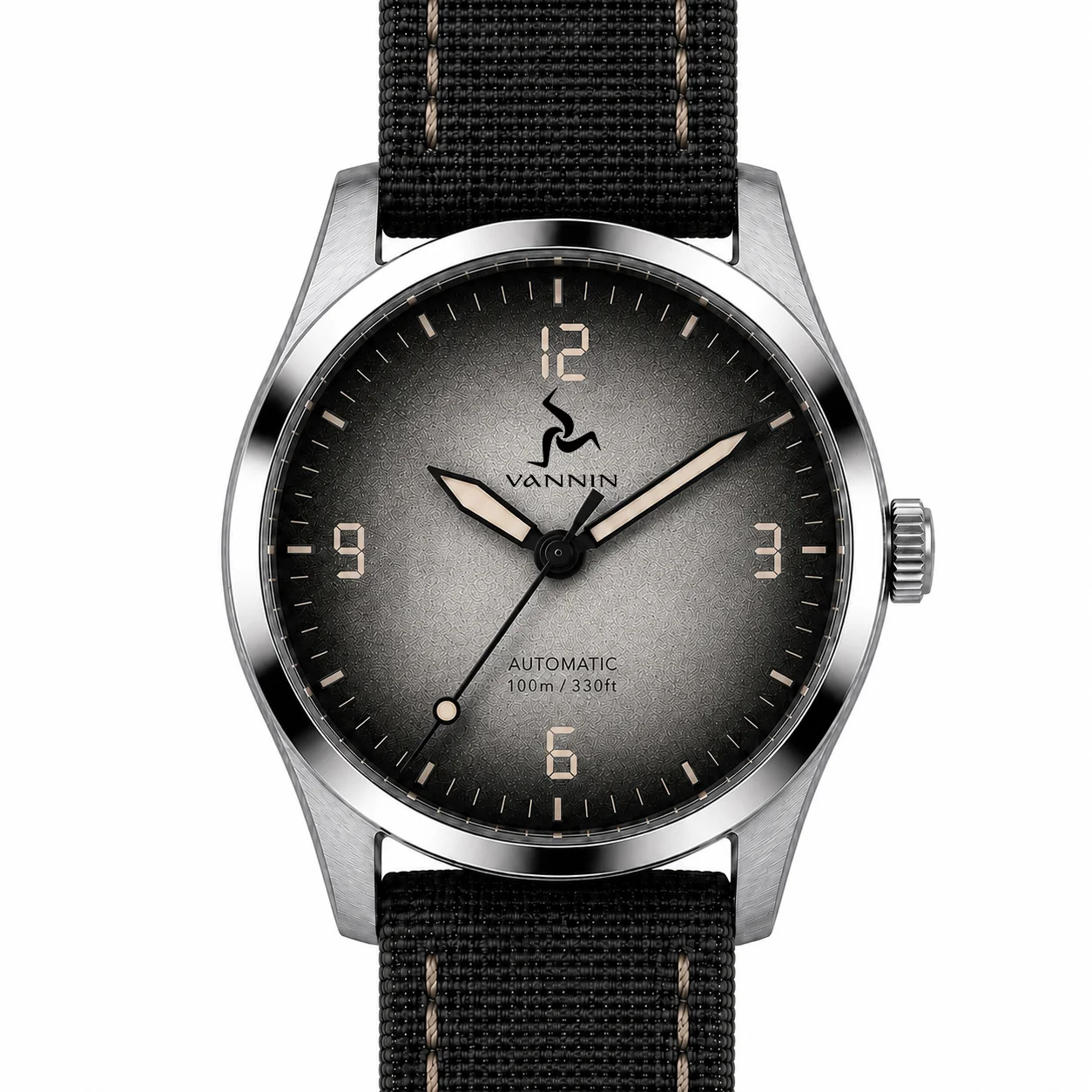
A 38 mm watch is 1.50 inches across, and how it sits depends more on lug-to-lug length and the flat top of the wrist than on diameter. On Shinola’s published proportions, a 38.0 mm case with a 46.0 mm lug-to-lug sits inside both of its rules for wrists of 6.0 to 7.2 inches (our arithmetic).
This guide uses published numbers, not photographs of watches on wrists. We read size guides from Shinola, Second Movement, Jewelers Mutual, Oracle of Time, Time+Tide and others, and the makers’ pages for the watches we name, all last checked 9 November 2026. We did not handle or test any watch. Where guides disagree we show both; percentages marked as our arithmetic are ours, built on one seller’s rule of thumb, and do not guarantee fit. To measure your wrist, use our watch size guide.
Disclosure: we are Vannin Watches, a Manx brand designed on the Isle of Man, and our first watch is 38.0 mm across, so we have a stake in the answer (The Field Watch is coming soon, and its numbers appear here beside everyone else’s).
A 38 mm watch has a case 38 millimetres across, which is 1.50 inches. That is the case diameter only. Lug-to-lug, thickness and lug width are separate numbers, and Oracle of Time argues that lug-to-lug matters more than diameter for how a watch fits.
What the number leaves out depends on the maker. Second Movement and Jewelers Mutual both say diameter excludes the crown, Vaer says its sizes exclude the crown and the lugs, and many makers do not say, so read each listing’s wording before you compare. Our watch size guide sets out the four case measurements, and watch lugs explained covers lug-to-lug.
A word on labels. Sellers sort watches into shelves labelled men’s, women’s and unisex, and unisex is a word shops use for a size and style they expect to sell to anyone. Those labels are sellers’ conventions, not measurements, and none of the pages we read says where its ranges come from. Our guide to unisex watches goes further into what the label means. Here we use the labels only to report what a seller says, and we describe wrists by their measurements.
A 38.0 mm case with a 46.0 mm lug-to-lug (the Field Watch’s published numbers) is inside both of Shinola’s proportion rules on wrists of 6.0 to 7.2 inches and outside them on smaller and larger wrists. Table 1 shows the arithmetic beside what four published guides say for each wrist size.
Method, in brief: Shinola’s shortcut takes the flat top of the wrist as the circumference divided by three. Its rule of thumb is that a case looks proportional at 60 to 75% of the flat top, and that lug-to-lug should be 75 to 95%. The percentages are our arithmetic on those rules, for round wrist sizes and not for any real wrist. “No entry” means a guide gives no range for that wrist size, not that nothing suits it.
| Wrist | Flat top | 38.0 mm case as % of flat top | 46.0 mm lug-to-lug as % of flat top | Shinola’s rules (case 60 to 75%; lug-to-lug 75 to 95%) | What the published guides say for this wrist |
|---|---|---|---|---|---|
| 5.5 in (139.7 mm, 14.0 cm) | 46.6 mm | 81.6% | 98.8% | Case: above. Lug-to-lug: above. | Jewelers Mutual: under 38 mm across and under 10 mm deep (wrists under 6 in). Oracle of Time: below 47 mm (under 6.5 in). Second Movement and Shinola: no entry. |
| 6.0 in (152.4 mm, 15.2 cm) | 50.8 mm | 74.8% | 90.6% | Case: inside (just). Lug-to-lug: inside. | Second Movement: 34 to 38 mm (6 to 6.5 in). Shinola: 38, 40 or 42 mm (6 to 7 in). Oracle of Time: below 47 mm (under 6.5 in). Jewelers Mutual: no entry. |
| 6.5 in (165.1 mm, 16.5 cm) | 55.0 mm | 69.0% | 83.6% | Case: inside. Lug-to-lug: inside. | Second Movement: 34 to 38 mm (to 6.5 in), then 38 to 42 mm. Shinola: 38, 40 or 42 mm. Oracle of Time: below 47 mm (under 6.5 in), then 46 to 50 mm. Jewelers Mutual: no entry. |
| 7.0 in (177.8 mm, 17.8 cm) | 59.3 mm | 64.1% | 77.6% | Case: inside. Lug-to-lug: inside. | Second Movement: 38 to 42 mm (to 7 in), then 42 to 45 mm. Shinola: 38, 40 or 42 mm (6 to 7 in). Oracle of Time: 46 to 50 mm (to 7 in), then 50 mm and beyond. Jewelers Mutual: no entry. |
| 7.5 in (190.5 mm, 19.1 cm) | 63.5 mm | 59.8% | 72.4% | Case: below (just). Lug-to-lug: below. | Second Movement: 42 to 45 mm (7 to 7.5 in). Shinola: 44 to 46 mm (7.5 to 8 in). Jewelers Mutual: 42 mm or more, 12 to 14 mm or more deep (7.5 in or more). Oracle of Time: 50 mm and beyond (7 in and over). |
| 8.0 in (203.2 mm, 20.3 cm) | 67.7 mm | 56.1% | 67.9% | Case: below. Lug-to-lug: below. | Shinola: 44 to 46 mm (7.5 to 8 in). Jewelers Mutual: 42 mm or more (7.5 in or more). Oracle of Time: 50 mm and beyond (7 in and over). Second Movement: no entry. |
How common is each wrist size? The only public wrist data we found is the US Army’s ANSUR II survey of 2012 (4,082 men and 1,986 women, US Army personnel including reservists). It is a US proxy, not a sample of UK adults, and we found no public UK dataset. The survey records two groups, male and female, so we use its words, men and women. Our band shares put a wrist exactly on an edge in the higher band, with edges converted at 25.4 mm per inch and rounded to the nearest millimetre. Our guide to average wrist size sets the survey out in full.
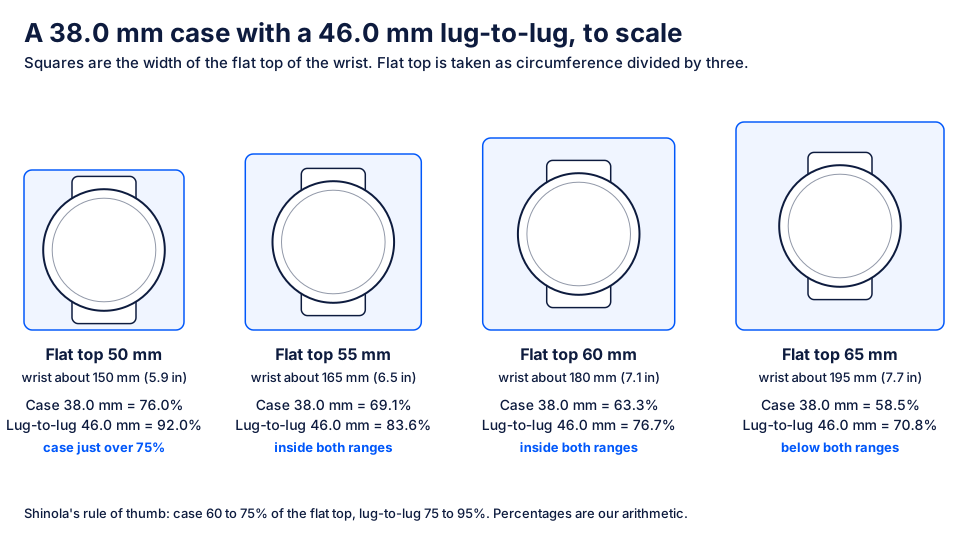
Figure 1 uses round flat tops, so its percentages differ slightly from Table 1’s, which start from wrist sizes in inches.
On this band a 38.0 mm case is inside Shinola’s case rule, at 74.8% of the flat top at 6.0 in and 69.0% at 6.5 in, and the 46.0 mm lug-to-lug is inside its lug rule at 90.6% and 83.6%. At 6.0 in the case figure is 0.2 points below the top of the range.
The guides agree most here. Second Movement gives 34 to 38 mm for 6 to 6.5 in, so 38 mm is the top of its band. Shinola’s 6 to 7 in range includes 38 mm, and Oracle of Time says to stay below 47 mm lug-to-lug under 6.5 in. Jewelers Mutual has no entry between 6 and 7.5 in. In the ANSUR II sample, 9.4% of men and 54.5% of women have wrists of 6.0 to 6.5 in.
Below 6.0 in the arithmetic changes. At 5.5 in the flat top is 46.6 mm, and 38.0 mm is 81.6% of it and 46.0 mm is 98.8%, above both of Shinola’s ranges. Jewelers Mutual says wrists under 6 in generally look better with a diameter under 38 mm and a depth under 10 mm. In the sample, 0.2% of men and 34.1% of women are under 6.0 in. Our size guide’s Table 6 lists watches of 34 to 38 mm with lug-to-lug from 41 mm.
A 38.0 mm case is inside or on the edge of every range we can source here: 69.0% of the flat top at 6.5 in and 64.1% at 7.0 in, with the 46.0 mm lug-to-lug at 83.6% and 77.6%.
Second Movement gives 38 to 42 mm for 6.5 to 7 in, and 38 mm is the bottom of that band. Shinola says 38, 40 or 42 mm for 6 to 7 in. Oracle of Time says 46 to 50 mm lug-to-lug feels balanced from 6.5 to 7 in, and 46.0 mm is the bottom of that band. In ANSUR II this band holds 48.2% of men and 10.8% of women.
Shinola’s shortcut treats the flat top as a third of the circumference, and Second Movement and Jewelers Mutual both say lug-to-lug should not run past the edges of the wrist, so measure your own flat top directly; our size guide shows how.
Here the published ranges and the proportion rules part company. At 7.0 in a 38.0 mm case is 64.1% of the flat top, inside Shinola’s range. At 7.5 in it is 59.8%, 0.2 points under the bottom of it, and the 46.0 mm lug-to-lug is 72.4%, under the 75% floor.
The guides disagree openly. Second Movement gives 42 to 45 mm for 7 to 7.5 in, so 38 mm is below its band. Shinola gives no range between 7 and 7.5 in, its bands being 6 to 7 and 7.5 to 8. Jewelers Mutual gives none until 7.5 in. Oracle of Time says 50 mm and beyond from 7 in, so 46.0 mm is below that too. We have not averaged these, because the sources do not agree and none says where its figures come from.
In ANSUR II, 7.0 to 7.5 in holds 35.5% of men and 0.6% of women. Wrists of 7 in (178 mm) or more are 42.3% of men and 0.6% of women.
From 7.5 in a 38.0 mm case is a smaller share of the flat top than Shinola’s rule asks: 59.8% at 7.5 in and 56.1% at 8.0 in, with the 46.0 mm lug-to-lug at 72.4% and 67.9%.
The big-wrist guides point upwards. Shinola gives 44 to 46 mm for 7.5 to 8 in, and Jewelers Mutual says 42 mm or more, with a depth of 12 to 14 mm or more. One maker differs: Vaer’s A5 Atlas page recommends its 38 mm for wrists of 6.5 to 8.0 in, while the sizing guide on the same page suggests 6.5 to 7.5 in for its 38 mm dive case.
Whether 38 mm reads as understated or too small on such a wrist is taste, which no guide we read addresses. The share is small: in ANSUR II, 6.4% of men have wrists of 7.5 to 8.0 in, 0.3% are over 8.0 in and 0.0% of women are in either band.
Not by the ranges we can source. 38 mm is the bottom of the range that Alpina, Gnomon, Goldsmiths and Timex label men’s, each 38 to 46 mm. Second Movement’s men’s range starts at 39 mm and Shinola’s at 40 mm, and both list 38 mm in a unisex range: Second Movement’s is 36 to 39 mm and Shinola’s is 38 to 42 mm.
A label is not a measurement. Seiko’s own UK page for the 38.0 mm 5 Sports SRPK29 carries a Men’s label, while Shinola calls 38 to 42 mm unisex sizes. None of the sellers whose ranges we quote cites a source for them: Shinola calls them general guidelines, Second Movement refers to unnamed industry standards, and Gnomon names Neatopia only in an image caption.
The survey data point the same way. In ANSUR II the median wrist among men is 176 mm (6.93 in), and the 5th to 95th percentile runs from 162 to 191 mm (6.4 to 7.5 in). Applying Shinola’s two rules to 38.0 mm and 46.0 mm, our arithmetic on one seller’s rule of thumb, the case rule holds for 94.7% of men, the lug-to-lug rule for 83.8% and both for 83.7%, as Table 2 shows.
| Shinola’s rules, flat top = circumference divided by three | Men (n = 4,082) | Women (n = 1,986) |
|---|---|---|
| Case rule holds (case 60 to 75% of the flat top) | 94.7% | 65.9% |
| Lug-to-lug rule holds (75 to 95% of the flat top) | 83.8% | 88.9% |
| Both rules hold (wrist 152 to 184 mm, 6.0 to 7.2 in) | 83.7% | 65.9% |
| At least one rule does not hold | 16.3% | 34.1% |
The rules do not hold for 16.3% of men, almost all of them wrists above 184 mm (7.2 in), where 38.0 mm is a smaller share of the flat top than the rule asks. For those wrists the guides that give a range start higher: Second Movement at 42 mm from 7 in, Jewelers Mutual at 42 mm from 7.5 in and Shinola at 44 mm from 7.5 in. Whether that makes 38 mm too small is taste, which the guides do not settle. Our guide to men’s watch sizes covers the label in full.
Sometimes, depending on the wrist, and the label ranges do not settle it. 38 mm is above the top of the range that Alpina, Goldsmiths, Timex and Second Movement label women’s, each ending at 36 mm, and Gnomon’s ends at 34 mm. It is inside Shinola’s women’s range of 34 to 40 mm and its unisex range of 38 to 42 mm.
In ANSUR II the median wrist among women is 154 mm (6.06 in), and the 5th to 95th percentile runs from 142 to 168 mm (5.6 to 6.6 in). Shinola’s two rules, applied to 38.0 mm and 46.0 mm, hold for 65.9% of women (our arithmetic; Table 2): the case rule alone for 65.9% and the lug-to-lug rule alone for 88.9%. The 34.1% for whom they do not hold are all wrists under 152 mm (6.0 in), where 38.0 mm is above 75% of the flat top.
Jewelers Mutual draws its line in the same place: it says wrists under 6 in generally look better with a diameter under 38 mm and a depth under 10 mm, and 34.1% of ANSUR women are under 6.0 in. So by these two guides the answer is often no, and for about a third of the survey’s women it is yes by their measures. A further 54.5% have wrists of 6.0 to 6.5 in, where Second Movement’s band ends at 38 mm and Shinola’s range includes it. If your wrist is under 6 in, check lug-to-lug and thickness before the label. Our guide to women’s watch sizes covers the label ranges and what to check when you choose from a shelf labelled men’s.
Two millimetres of diameter move the proportions less than lug-to-lug, thickness and bezel do. Table 3 applies Shinola’s case rule to three sizes. By that arithmetic 36 mm and 38 mm are inside the 60 to 75% range from 6.0 to 7.0 in, and 40 mm is inside it from 6.5 to 7.5 in.
| Wrist (flat top) | 36 mm | 38 mm | 40 mm |
|---|---|---|---|
| 6.0 in (50.8 mm) | 70.9% (inside) | 74.8% (inside, just) | 78.7% (above) |
| 6.5 in (55.0 mm) | 65.4% (inside) | 69.0% (inside) | 72.7% (inside) |
| 7.0 in (59.3 mm) | 60.7% (inside) | 64.1% (inside) | 67.5% (inside) |
| 7.5 in (63.5 mm) | 56.7% (below) | 59.8% (below, just) | 63.0% (inside) |
Published advice gives similar ladders. Vaer, one maker, suggests 6.25 to 7.25 in for its 36 mm field case, 6.5 to 7.5 in for its 38 mm dive case and 6.5 to 7.75 in for its 40 mm field case. Jewelers Mutual ties its advice to lugs: with longer lugs it suggests a shorter overall size of 36 to 40 mm, and with shorter lugs 40 to 44 mm. Second Movement adds that a narrow bezel makes a dial look larger than its diameter, and a broad one smaller.
Lug-to-lug can outweigh a 2 mm step. Oracle of Time says a 36 mm case with long lugs can look larger than a 40 mm case with short ones. Nomos’s page gives the 36.0 mm Club Campus a lug-to-lug of 44.3 mm, while Beaucroft’s gives its 38 mm Arc 43.5 mm. Our size guide’s Table 4 gives the footprint of each size, so we do not repeat it.
Lug-to-lug decides whether a watch overhangs the wrist, and it varies more among 38 mm watches than the diameter suggests. The five 38 mm watches in our size guide’s Table 6 run from 43.5 to 47 mm, each as its maker publishes it: Beaucroft 43.5 mm, Hamilton 47 mm, Seiko 44.2 mm, Vaer 45 mm and Vannin 46.0 mm.
Time+Tide’s Zach Blass says most conventional 38 mm watches have a lug-to-lug of about 45 to 48 mm, and says 38 mm is often called a Goldilocks diameter and a fan favourite, which is a remark about popularity, not a measurement. Two of the five, Beaucroft and Seiko, are shorter than that range.
Against Oracle of Time’s lug-to-lug bands, Hamilton’s 47 mm is not below its 47 mm ceiling for wrists under 6.5 in, while the other four are. For 6.5 to 7 in, where it says 46 to 50 mm, Beaucroft, Seiko and Vaer are below the band and Hamilton and Vannin are inside it.
Shinola’s lug rule shifts the same way (our arithmetic). 43.5 mm is 75 to 95% of a flat top of 45.8 to 58.0 mm, a circumference of about 137 to 174 mm or 5.4 to 6.9 in, while 47 mm fits a flat top of 49.5 to 62.7 mm, about 148 to 188 mm or 5.8 to 7.4 in. Blass’s principle is that a watch can be too long for the wrist before it is too wide for the arm. Our lugs guide explains how to measure it.
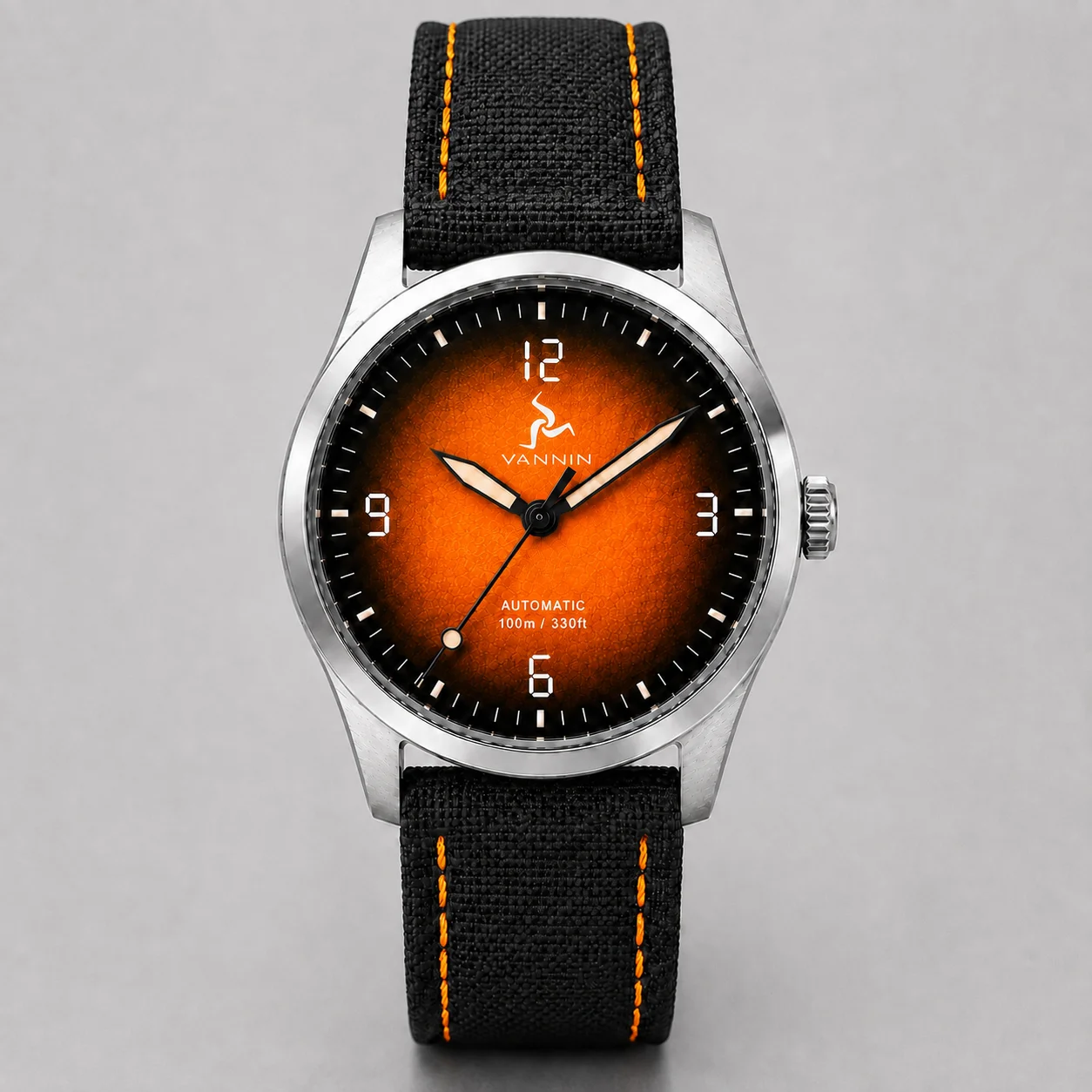
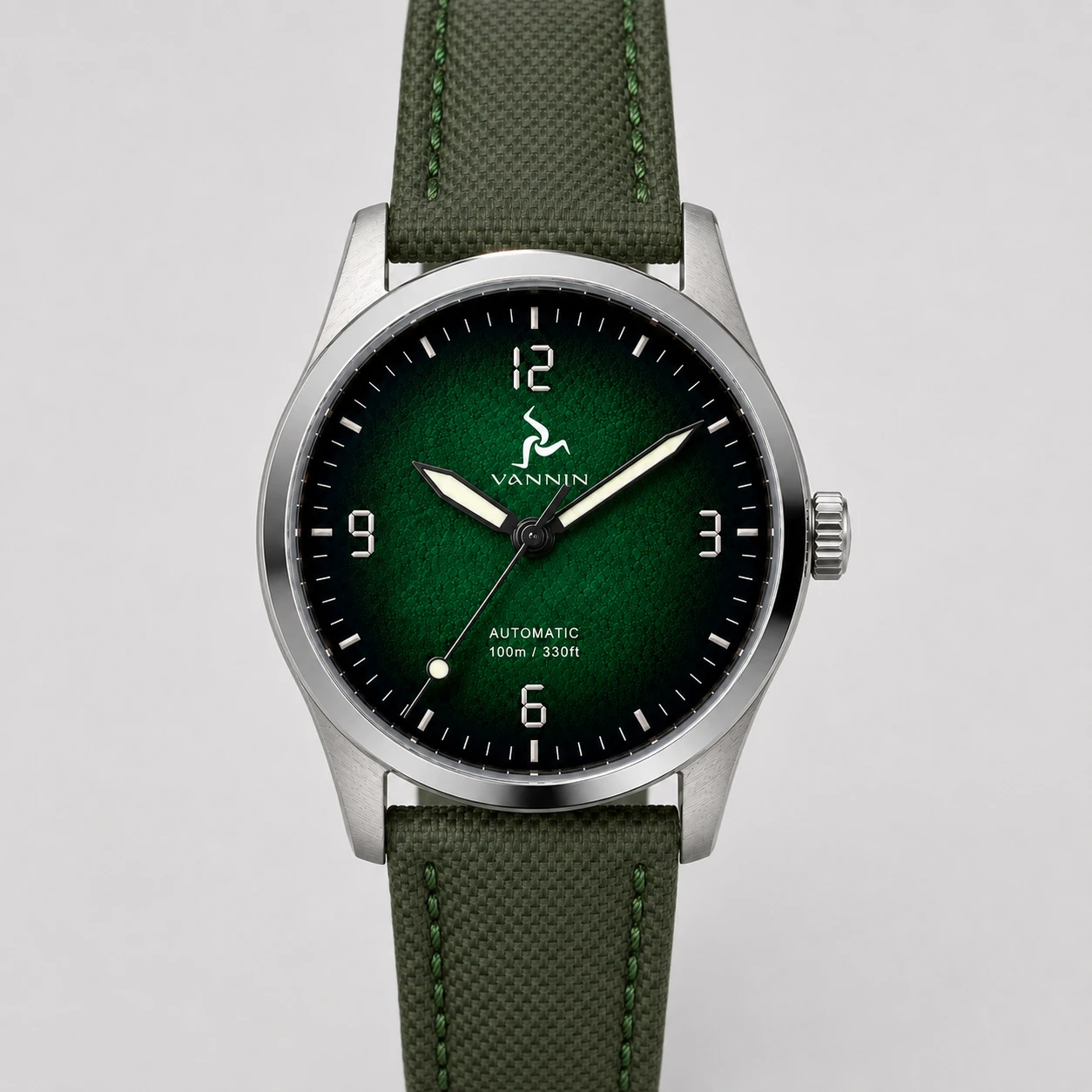
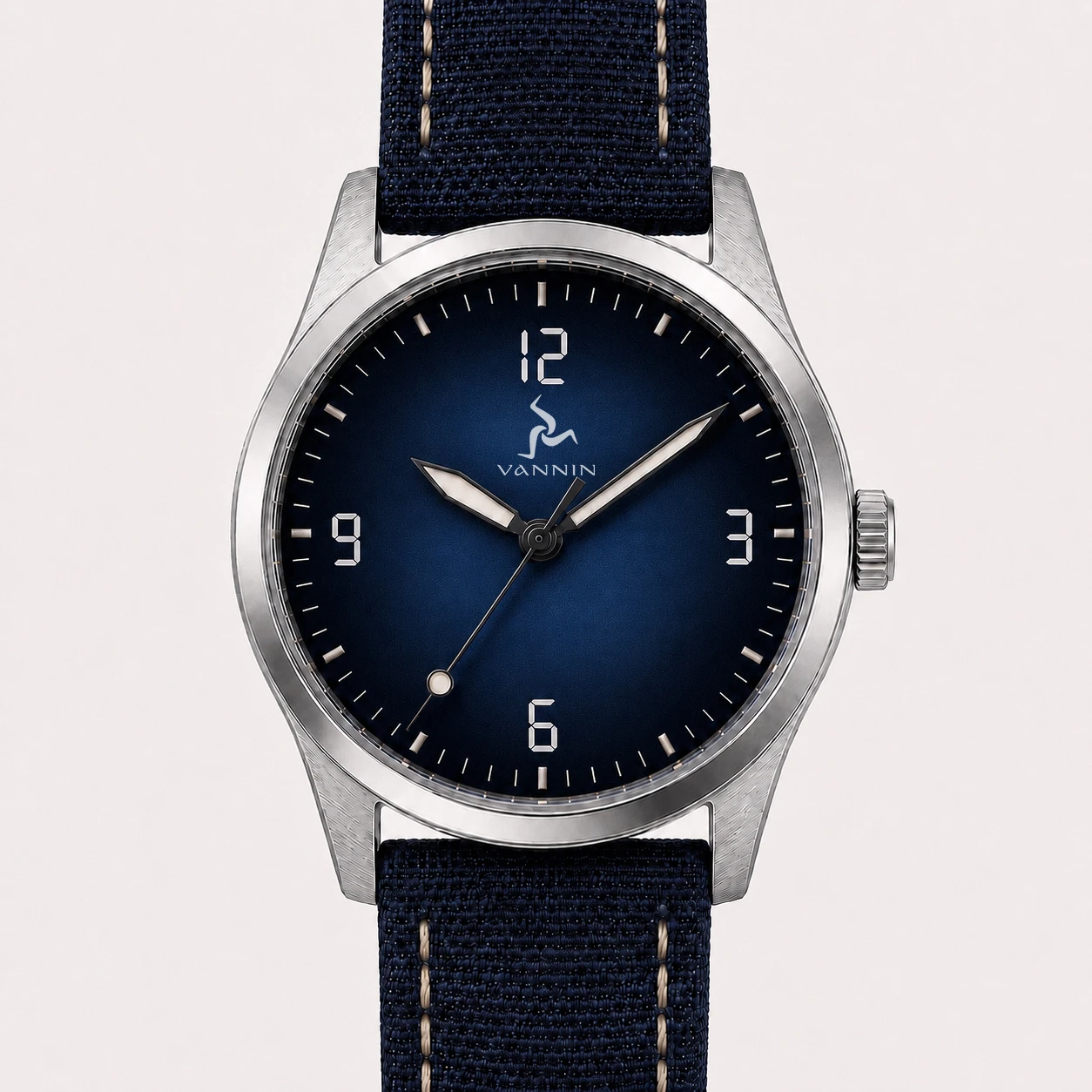
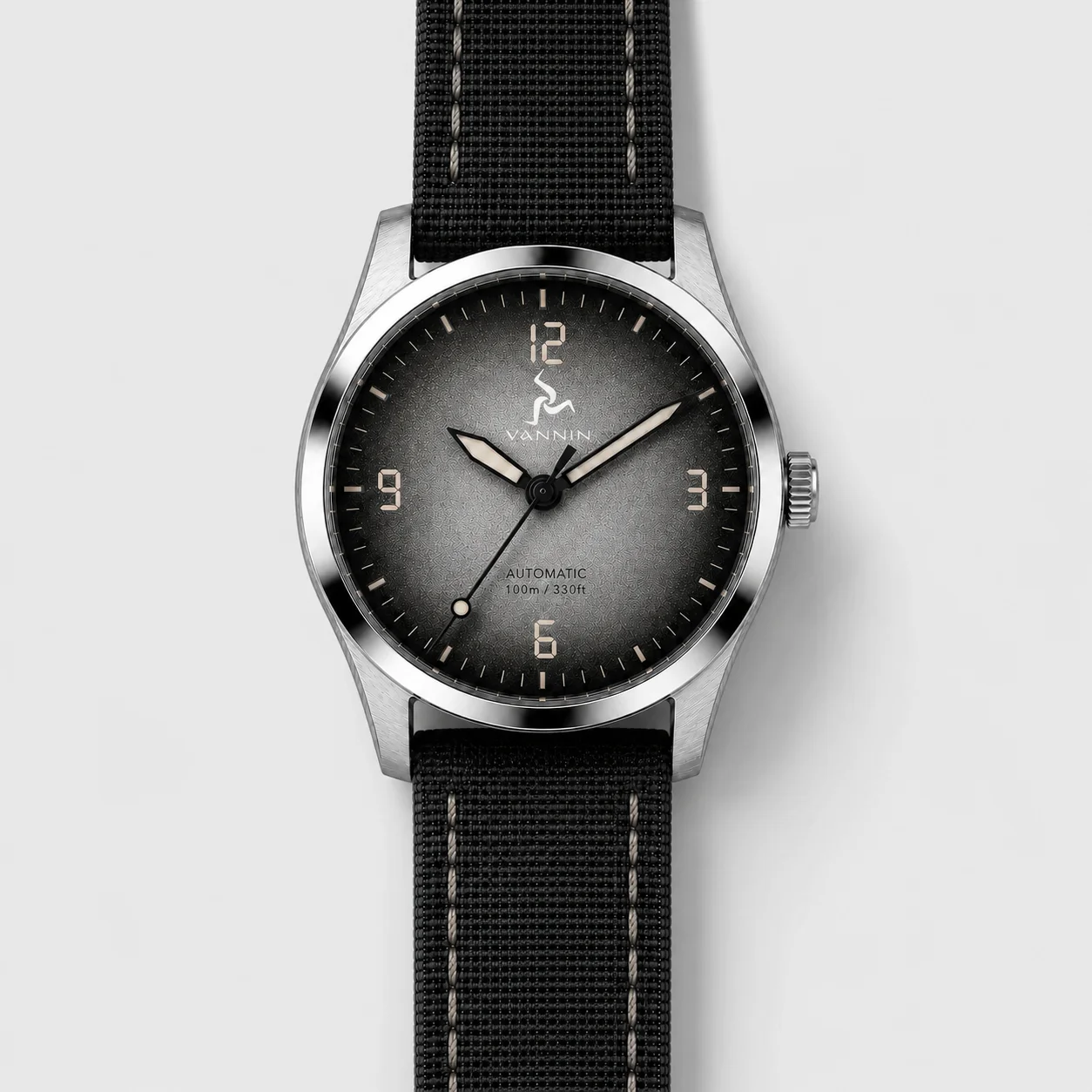
The Field Watch’s published numbers are a 38.0 mm case, a 46.0 mm lug-to-lug, 11.2 mm thick including the crystal and a 20.0 mm lug width. The Field Watch is coming soon. We do not call it men’s, women’s or unisex, because those are sellers’ labels, and we give measurements so you can check them against your own wrist.
Set beside the guides, each statement uses the guide’s own range. For a 6 to 6.5 in wrist, 38.0 mm is the top of Second Movement’s 34 to 38 mm band. For 6.5 to 7 in it is the bottom of that guide’s 38 to 42 mm band, and Shinola’s 6 to 7 in range includes it. For lug-to-lug, 46.0 mm is under Oracle of Time’s 47 mm ceiling for wrists under 6.5 in and at the bottom of its 46 to 50 mm band for 6.5 to 7 in.
The caveats are as specific. For wrists under 6 in, Jewelers Mutual suggests a diameter under 38 mm and a depth under 10 mm, and the Field Watch’s published 38.0 mm and 11.2 mm are neither. For wrists of 7 in and over, Second Movement, Shinola and Jewelers Mutual give larger cases, and Oracle of Time’s 50 mm and beyond is longer than 46.0 mm.
On proportions, Shinola’s two rules both hold for flat tops of 50.7 to 61.3 mm, wrists of about 6.0 to 7.2 in: 83.7% of ANSUR men and 65.9% of ANSUR women. Table 2 gives the 16.3% and 34.1% for whom they do not. This is arithmetic on one seller’s rule of thumb, not a guarantee of fit.
In the Journal, the founder says he knew early that he did not want a big watch, and “We settled on 38mm.” That is the founder’s view, not a fit claim. The Field Watch’s 20.0 mm lug width is covered in our 20 mm strap guide, and our field watch roundup lists other makers’ 38 mm field watches from their own pages. The numbers for the Field Watch itself are on its product page.
Is 38mm a men’s or a women’s watch size?
Sellers disagree, so it is neither by any standard. Alpina, Gnomon, Goldsmiths and Timex start their men’s ranges at 38 mm. Alpina, Goldsmiths, Timex and Second Movement end their women’s ranges at 36 mm, and Shinola calls 38 to 42 mm unisex sizes. A label is a shelf, not a measurement, so choose by your wrist and the lug-to-lug.
Is a 38mm watch too small for a 7 inch wrist?
Not on the numbers we found. Shinola’s 6 to 7 inch range includes 38 mm, and Second Movement gives 38 to 42 mm up to 7 inches and 42 to 45 mm from 7 inches. Our arithmetic on Shinola’s rule puts a 38.0 mm case at 64.1% of the flat top of a 7.0 inch wrist, inside its 60 to 75% range.
Is 38mm too small for a dive watch?
No guide we read sets a separate range for dive watches, so the wrist arithmetic is the same. Makers do sell them at 38 mm: Certina’s UK site lists its 38 mm DS Action Diver models, and Vaer suggests its 38 mm dive case for wrists of 6.5 to 7.5 inches. Check thickness as well as lug-to-lug before you decide.
Should I get 38mm or 40mm?
Compare lug-to-lug before diameter. Our arithmetic on Shinola’s case rule puts 38 mm inside the 60 to 75% range of the flat top from 6.0 to 7.0 inches and 40 mm inside it from 6.5 to 7.5 inches. Oracle of Time says a 36 mm case with long lugs can look larger than a 40 mm case with short ones.
What does a 38mm watch look like on a 6.5 inch wrist?
We use no wrist photographs, because a photograph shows one wrist, not yours. In numbers, a 6.5 inch wrist is 165.1 mm round and about 55.0 mm across the top. A 38.0 mm case is 69.0% of that and a 46.0 mm lug-to-lug is 83.6%, our arithmetic, both inside Shinola’s ranges for proportion.
Is 38mm a good size for a field watch?
That depends on your wrist, not the category. Hamilton lists its Khaki Field Mechanical at 38 mm with a 47 mm lug-to-lug, and our Field Watch is 38.0 mm with a 46.0 mm lug-to-lug. The founder’s view, in our Journal, is that he did not want a big watch and settled on 38mm. Check your flat top.
How many inches is 38mm?
38 mm is 1.50 inches, because 38 divided by 25.4 is 1.496. In the other direction, 1.5 inches is 38.1 mm. Both figures are a case diameter. Lug-to-lug, thickness and lug width are separate numbers, so two watches of the same diameter can have different lug-to-lug lengths.
About the author: Andrew Pickett is a founder of Vannin Watches, with Peter Jones. Vannin Watches Limited is registered on the Isle of Man, where its first watch, the Field Watch, was designed. Andrew compiled this guide from the published sources listed below; we have not tested any of the watches it mentions.
Sources and pages read
- Shinola: watch size guide
- Second Movement: guide to choosing the right watch size for your wrist
- Jewelers Mutual: how should a watch fit
- Oracle of Time: why lug-to-lug is the spec that really matters
- Time+Tide: why lug-to-lug is the most important measurement
- Timex: watch size guide
- Goldsmiths: watch size guide
- Alpina: watch size guide
- Gnomon: watch size guide
- Beaucroft: The Arc
- Hamilton: Khaki Field Mechanical 38mm
- Timex UK: Marlin Quartz 34mm
- Seiko: 5 Sports SRPK29
- Vaer: A5 Atlas Black Auto 38mm
- Nomos Glashütte: Club Campus 717
- Certina UK: unisex watch listing
- Penn State OPEN Design Lab: ANSUR II
- ANSUR II technical report (Natick TR-15/007)
- ANSUR II male public data file
- ANSUR II female public data file