
Guide
Unisex watches: what the label means, what size they are, and how to choose one that fits anyone
What “unisex” means on a watch, what sizes six sellers attach to it, why 38 mm keeps appearing, and how to choose by measurement when you do not want to shop by label.
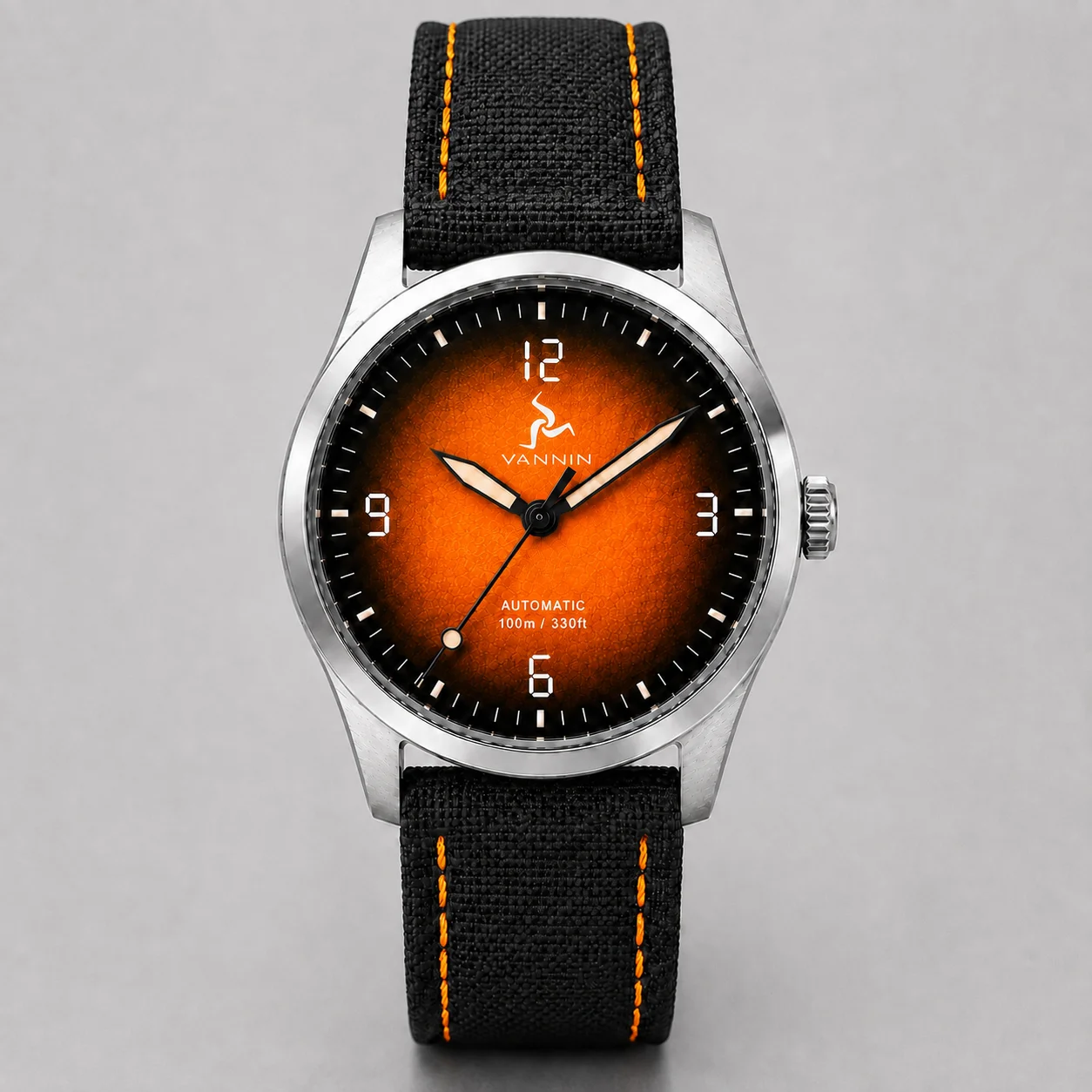
Unisex is a word shops use for a size and style they expect to sell to anyone, and we found no standard that defines it. Of six sellers’ size guides, only two give a unisex range, 36 to 39 mm and 38 to 42 mm, so one watch can sit on different shelves.
This guide reports what sellers and makers say on their own pages, all last checked 9 November 2026: six size guides, the product pages for the watches in our table, and the sources for the history. Nothing here comes from using the watches ourselves: we did not handle or test any watch. To measure your wrist, see our watch size guide, whose Table 5 already lists the label ranges; here we cover what the label means and how to choose without it.
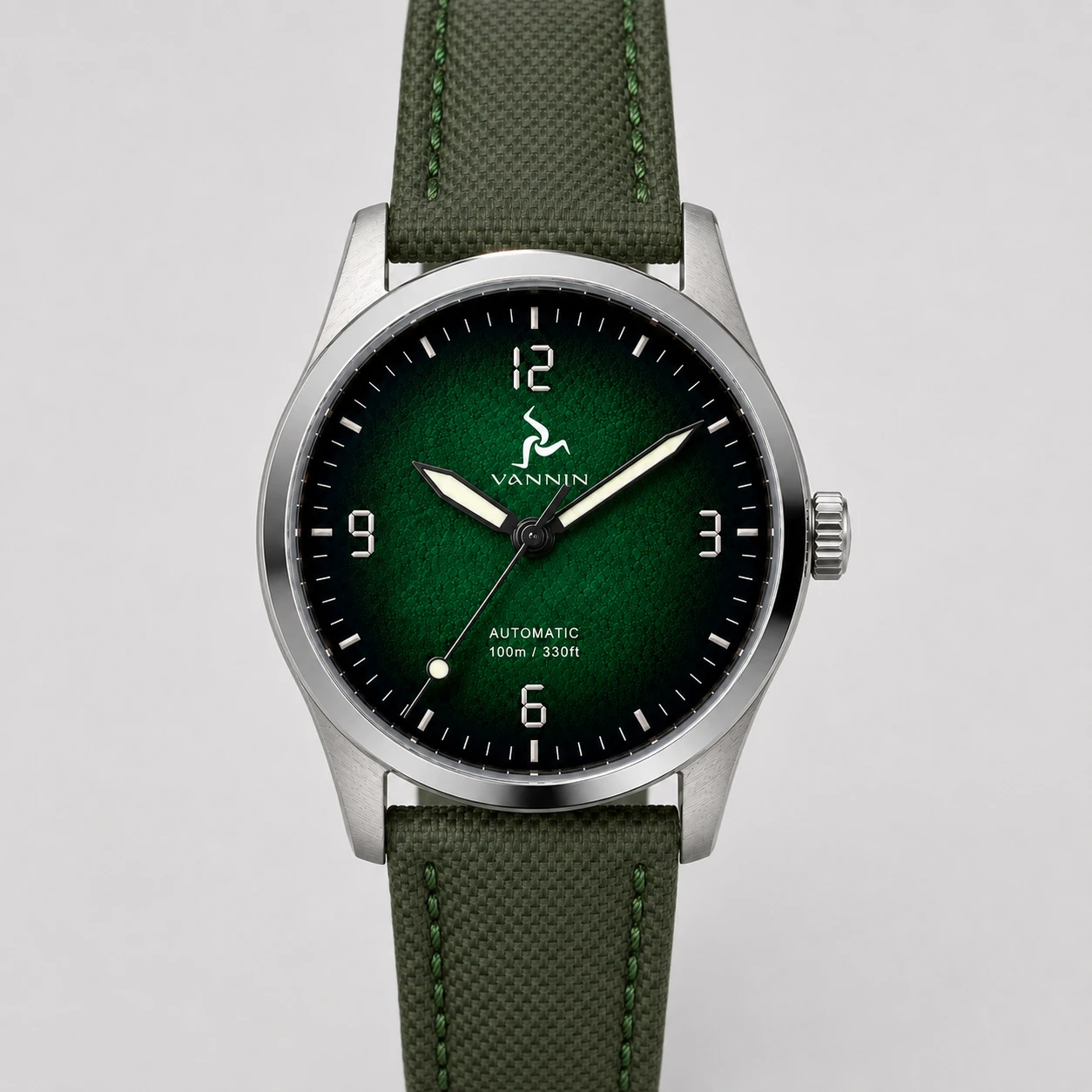
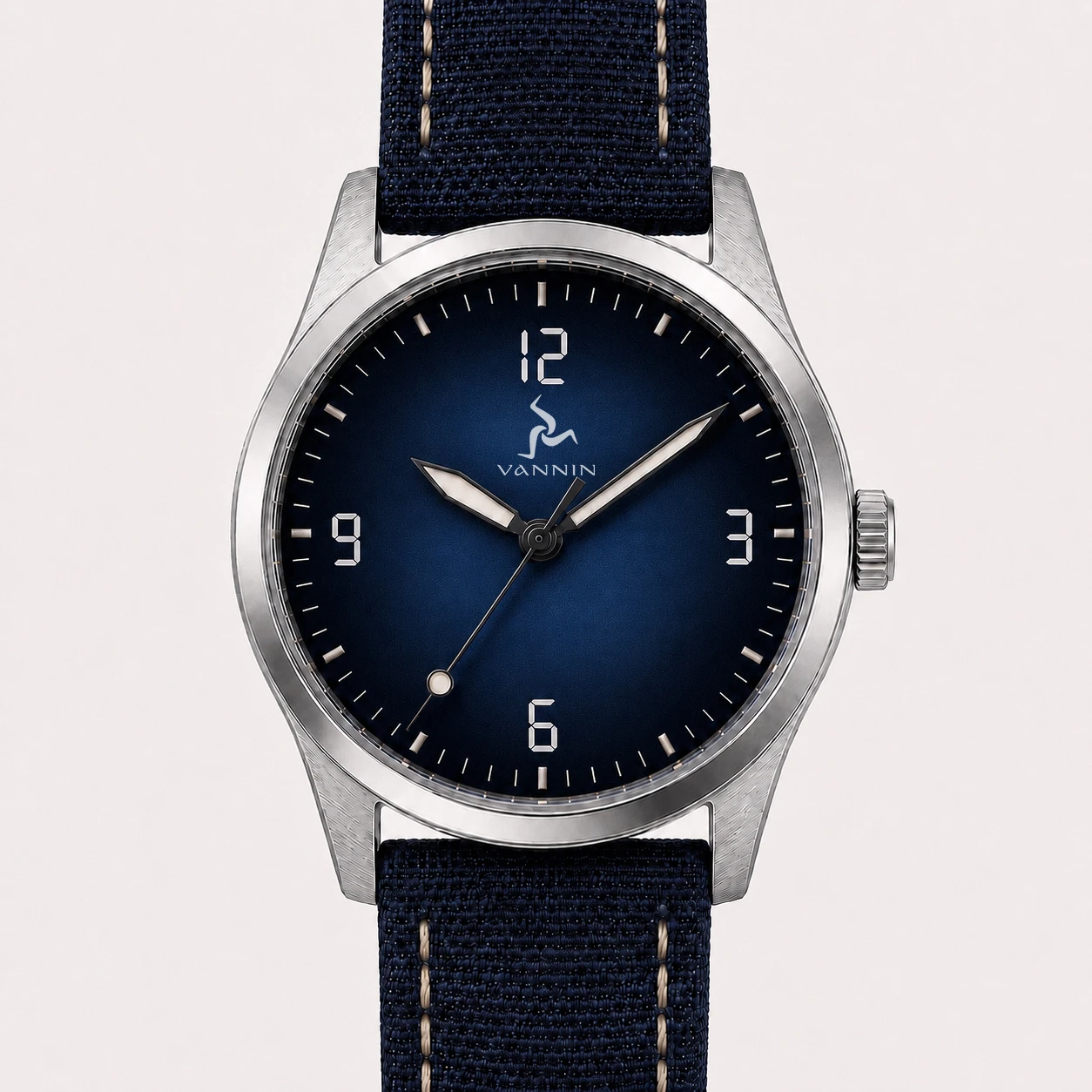
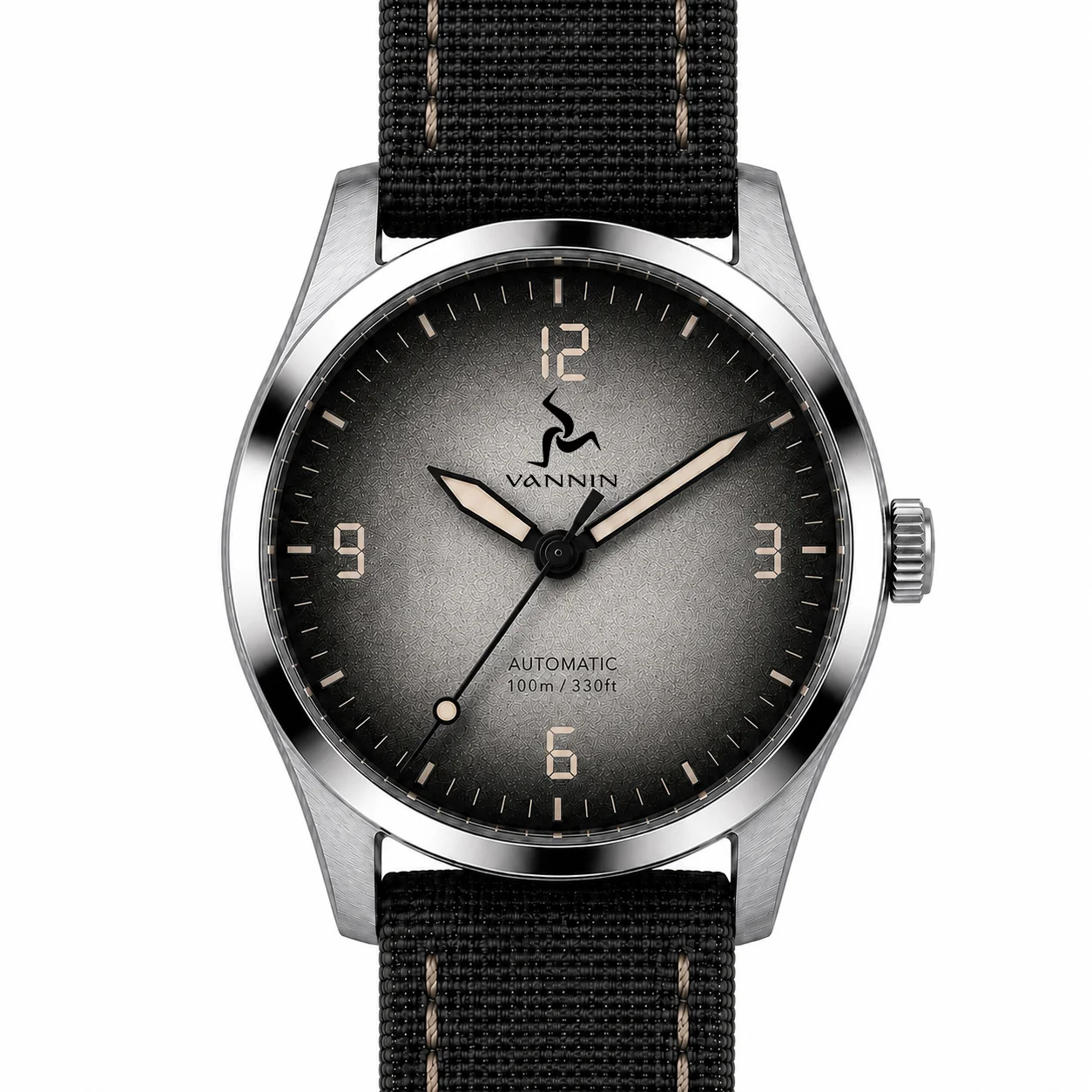
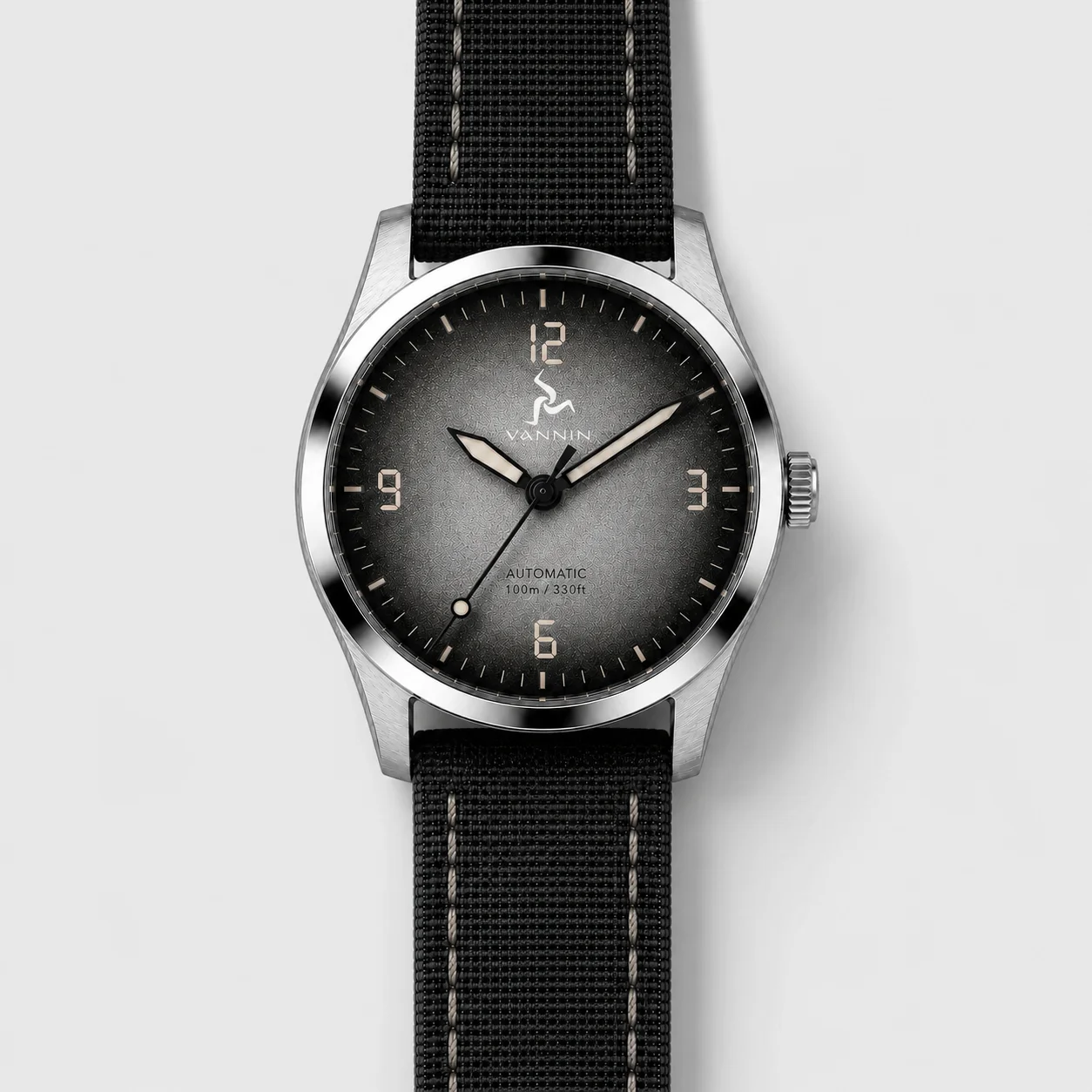
Disclosure: we are Vannin Watches, a Manx brand designed on the Isle of Man, and our first watch is 38.0 mm across, so we have a stake in this topic (The Field Watch is coming soon, and it comes last in our table).
It is a convention, not a measurement. Skyrim Wrist, a custom-watch seller, says a 36 mm watch “may be sold as men’s, women’s, or unisex depending on the brand” and that the unisex section “may simply contain the same designs under a newer label”. Teddy Baldassarre, introducing its list of 20 unisex watches, says the definition “can vary widely”. None of the pages we read cites a standard.
Some sellers describe what they mean. Timex’s blog says unisex watches are “designed more so for any kind of wearer”, and Second Movement calls its 36 to 39 mm range “a versatile middle ground”. Those describe intent, and neither gives a test for whether a watch qualifies.
Sellers also use the neighbouring words as if they meant the same thing. Ormoda’s page is headed “Unisex Watches”, has “genderless” in its web address, and calls its watches genderless in the text, and Timex’s blog speaks of “gender-neutral designs for unisex watches”. Neither explains a difference.
Certina’s own pages show how loose the label can be. Its UK page for the 38 mm DS Action Diver reads “Unisex watch” under the model name, while the page’s title begins “Men Automatic DS Action Diver 38 mm watch”, and the same watch is listed on Certina’s men’s, women’s and unisex pages. We use “unisex” in headings because it is what people search for, and treat it as a seller’s label throughout. What the label does tell you is which section of a site a watch sits in. It does not give lug-to-lug, thickness or lug width, or say which wrist the watch suits, and Table 1 shows how much those numbers vary.
There is no single unisex size. Among six sellers’ size guides, two name a unisex range, and they differ: Second Movement gives 36 to 39 mm and Shinola gives 38 to 42 mm.
Alpina, Gnomon, Goldsmiths, Second Movement, Shinola and Timex each publish case-diameter ranges. Shinola’s guide says “Measurements between 38mm - 42mm are considered to be unisex sizes.” Second Movement’s unisex range sits between its women’s 24 to 36 mm and its men’s 39 to 44 mm. The other four give men’s and women’s ranges only, with men’s at 38 to 46 mm and women’s ending at 36 mm (Gnomon’s at 34 mm), and Goldsmiths’ size guide gives no unisex range. The six guides are Shinola, Second Movement, Timex, Goldsmiths, Alpina and Gnomon.
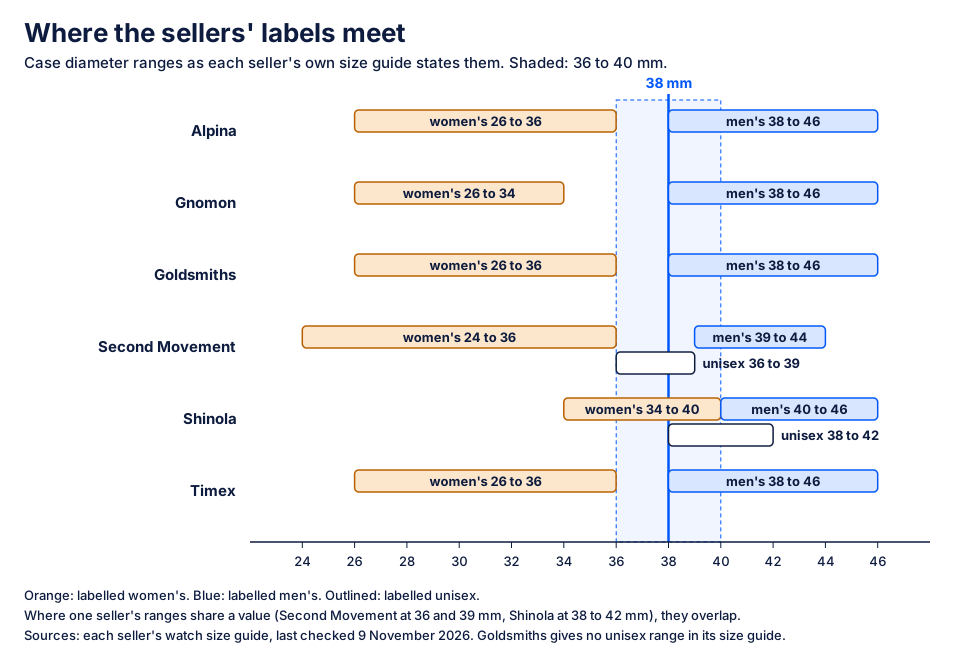
Read across, the labels meet in the shaded band. The women’s ranges end at 34, 36 or 40 mm and the men’s begin at 38, 39 or 40 mm, so a 38 mm case is in the men’s range at four of the six sellers, in the unisex range at two and in the women’s range at one, Shinola’s, which runs to 40 mm. Our guides to men’s watch sizes and women’s watch sizes take each shelf in turn.
None of the six says where its numbers come from. Shinola calls them “general guidelines”, Second Movement cites “widely accepted industry standards” without naming one, Gnomon captions an image “Source: Neatopia”, and Alpina, Goldsmiths and Timex give no source; Goldsmiths says 42 mm is “the most popular men’s size” with no source or date. They also hedge. Alpina says its ranges “serve as useful guidelines” and that personal style preferences and comfort “should ultimately inform the final choice”, and Timex says watches outside its ranges “may be considered mini or oversized” but that it is all down to personal preference.
Almost every unisex range we found includes it. Second Movement’s and Shinola’s do, and Ormoda, a shop, says most genderless watches sit at 38 to 42 mm. Skyrim says 36 to 39 mm is “often the easiest shared size”, and WatchGecko’s list of watches couples can share has five picks from 36 to 41 mm, including a 38 mm Oris. Teddy Baldassarre gives size as one of its criteria, “most under 38mm”, which leaves 38 mm at its edge. Ormoda also calls 40 mm “the de facto standard for unisex proportions”, so 38 mm is not the only size shops point to.
Certina’s UK unisex page lists 20 watches. Thirteen are named DS Action Diver 38 mm, DS Action Diver 38mm Titanium or DS-1 38mm, and the seven DS-7 cards show no diameter. This is a pattern in what sellers publish, not evidence of what anyone prefers or buys. Our 38 mm watch guide works through 38 mm on wrists of 5.5 to 8 inches.
Diameter is one of four numbers, and two watches of one diameter can differ by millimetres elsewhere. In Table 1, Certina’s two 38.00 mm watches differ by 2.88 mm in height, 13.22 mm against 10.34 mm, and the 38.5 mm NOMOS has a lug-to-lug 3.53 mm longer than the Certina DS-1’s (our arithmetic: 48.9 mm less 45.37 mm). Skyrim’s fit table says lug-to-lug “should usually remain within the flat top of the wrist” and that fixed end links “can extend the real span beyond the listed case”. Goldsmiths’ guide gives around 7 mm thick for a small to medium case and around 9 mm for a large one, while the watches in Table 1 run from 8.2 mm to 13.22 mm, so thickness is a number to read, not to assume. Our watch lugs guide explains lug-to-lug, lug width and thickness.
No source we found says when the men’s and women’s labels began, so we give only dated facts. The Patek Philippe Museum catalogues an 1868 watch as a “Lady’s wristwatch”, with a rectangular case 32.3 mm wide. Audemars Piguet says that in 1993 the average size of men’s watches was around 36 mm. Rolex says its Explorer was 36 mm in 1953, 39 mm from 2010 and 36 mm again in 2021, and that a 40 mm version has been sold since 2023. Helzberg, a US jeweller, says that historically women’s watches were under 30 mm and men’s 34 to 38 mm; it gives no date or source.
In short, measure your wrist and compare watches by their numbers, not their shelf. Our view, as a short routine: measure your wrist, read the maker’s own numbers, then check the strap and clasp.
Take two measurements of your own, the circumference of your wrist and the width of its flat top, as our watch size guide shows, and see where common wrist sizes sit in our average wrist size guide. Then read each maker’s own words, because they differ: Certina’s “Between lugs” is lug width, Tissot’s “Case length” is not defined as lug-to-lug, and NOMOS, Timex and Certina’s DS-1 give lug-to-lug outright, as Table 1 shows. Where a number is missing, “not stated” is a fair thing to write down.
Where a shop lets you filter, use case diameter. Goldsmiths’ Diameter filter runs from 21 mm to over 51 mm, and the same page has a Recipient filter: Unisex (290), For Him (10) and For Her (3). Skyrim says that starting with a gender filter “can remove watches that meet your actual requirements” and suggests searching by specifications. Certina’s DS-1 range page shows its 38mm models labelled “Unisex watch” among watches labelled “Men watch”, and its men’s and women’s pages both list the 38 mm DS Action Diver, so a department filter is not a fit filter. Where a shop gives no diameter filter, read the specification list for lug-to-lug and thickness, and ask if they are missing.
Helzberg says the differences between shelves usually come down to band length, colour and design details. Skyrim lists the checks that matter on a wrist: whether the strap tightens enough, where the clasp sits, whether fixed end links can turn down around the wrist, and whether the crown presses into the back of the hand. It also says to check a brand’s stated wrist range and how many bracelet links can be removed, not to take every link from one side so the clasp sits near the centre beneath the wrist, and to look for half links or clasp micro-adjustment, since a full link can be too big a jump between tight and loose. These are properties of a particular watch, whichever shelf it sits on.
You do not need a label to choose a watch. The labels are shelf headings, and sellers’ own pages say so. Skyrim Wrist calls “men’s watch” “usually a retail category rather than a technical definition”, Helzberg says that “the actual millimeter measurements are universal”, and WatchGecko says that “watches don’t really have a gender”. What a watch actually has is a set of numbers, and they are the same whichever shelf it sits on.
So shop by measurement. Measure your wrist, then compare case diameter, lug-to-lug, thickness and lug width, the four numbers our watch size guide explains. Where a shop lets you filter by diameter, use that and skip the department. Goldsmiths’ unisex page, for example, offers a diameter filter, and when we looked on 9 November 2026 it also listed watches whose own titles still said Mens Watch, which shows how loose the heading is.
Some makers and shops call a watch genderless or gender-neutral. That describes how it is designed and sold, and it does not change the fit. Ormoda, an online shop, says genderless watches are “designed without a primary audience in mind”, puts most of them at 38 to 42 mm, and adds that lug-to-lug “matters as much as diameter”. Read a label like that as a hint about size, then check the numbers against your own wrist.
What differs between shelves is rarely the watch itself. Helzberg says the differences “usually come down to band length, color, and design details”, so check the strap length as well as the case; our 20 mm watch strap guide covers how straps are sized.
We follow the same rule here. We describe watches, ours included, by their measurements and not by who they are for, and where a seller’s label matters we say it is the seller’s. If a page on this site ever tells you what a watch is for, please tell us.
If two people want to share one watch, start from the narrower wrist, not from the label. Skyrim says couples can share a watch when the bracelet or strap adjusts easily, and that 36 to 39 mm is often the easiest shared size, although clasp and strap range still need checking, and WatchGecko’s picks for couples run from 36 to 41 mm. Skyrim adds that two people can share a wrist circumference and still have different amounts of flat space across the top, and that a flatter wrist can often support a longer case than a rounder one of the same size, so compare flat tops, not only circumference. Our view: strap or bracelet length is the one thing you can change afterwards, since the case and its lug-to-lug cannot be altered.
A matched pair sold as “his and hers” is two watches and two wrists to measure, so the same numbers apply to each. We found no seller page that sets a size rule for pairs.
Table 1 shows six watches from other makers and our own, chosen because a seller labels them unisex or lists them in more than one section. It is not a ranking or a list of recommendations. Every figure is what the page said on 9 November 2026, and a row we could not check was dropped.
| Watch | Diameter | Lug-to-lug | Thickness | Lug width | Price as shown | What the seller’s page says |
|---|---|---|---|---|---|---|
| Certina DS Action Diver 38 mm | 38.00 mm | not stated | 13.22 mm | 19.00 mm | £860.00, certina.com/gb; “Recommended retail price (VAT included)” | “Unisex watch ∙ Automatic ∙ Black ∙ 316L stainless steel ∙ PVD coating”; the same watch is on Certina’s men’s, women’s and unisex pages |
| Certina DS-1 38mm | 38.00 mm | 45.37 mm | 10.34 mm | 19.00 mm | £660.00, certina.com/gb; “Recommended retail price (VAT included)” | “Unisex watch ∙ Automatic ∙ Blue ∙ 316L stainless steel”; the page’s own title begins “Unisex Automatic DS-1 38mm watch” |
| NOMOS Club Campus 36 mm | 36.0 mm | 44.3 mm | 8.2 mm | 18 mm | GBP 1,380, nomos-glashuette.com/en-gb; “Price incl. VAT”; “Sold out online” | No label found on the page; its page description is addressed to “men and women alike” |
| NOMOS Club Campus 38 (38.5 mm) | 38.5 mm | 48.9 mm | 8.5 mm | 20 mm | GBP 1,520, nomos-glashuette.com/en-gb; “Price incl. VAT”; “Sold out online” | No label found on the page; its page description is addressed to “men and women” |
| Timex Marlin Quartz 34mm | 34 mm | 41 mm | 10.5 mm | 18 mm | £180.00, timex.co.uk; VAT not stated | No label found; listed in both Timex’s men’s and women’s collections |
| Tissot PRX 35mm quartz | 35.00 mm | not stated (“Case length” 34.60 mm) | 9.60 mm | 11.00 mm | £335.00, tissotwatches.com/en-gb; VAT not stated | No label found; the page says “for today’s people of all ages”; 35 mm PRX models are listed on both Tissot’s men’s PRX page and its women’s PRX 35 page |
| Vannin Field Watch | 38.0 mm | 46.0 mm | 11.2 mm including crystal | 20.0 mm | £399 (our price), VAT not stated; coming soon | No gender label: we do not label it |
Two things stand out, both from the table. First, labels live on the seller’s page and not in the watch: Certina labels both of its watches here unisex, Timex and Tissot list theirs in both sections, and NOMOS shows no label on the page. Second, numbers beyond diameter vary: lug-to-lug runs from 41 mm to 48.9 mm in the rows that state it. Prices are UK pages only, so a maker’s US or European price may differ, and NOMOS’s two base pages say “Sold out online”. Read the last column as each seller’s words, not ours.
On the numbers alone, the Field Watch is a 38.0 mm case with a 46.0 mm lug-to-lug, 11.2 mm thick including the crystal, on 20.0 mm lugs. The Field Watch is coming soon. We do not label it for anyone, and give measurements so you can check them against your own wrist.
Two sellers’ unisex ranges include 38.0 mm, Second Movement’s 36 to 39 mm and Shinola’s 38 to 42 mm, and so does Ormoda’s 38 to 42 mm for what it calls genderless watches. A range is not a fit, though, and labels for the same number point in different directions: 38 mm is the bottom of the men’s range at Alpina, Gnomon, Goldsmiths and Timex, and inside Shinola’s women’s range, which is why we do not label the watch ourselves. Beside the other watches in Table 1, the Field Watch’s 46.0 mm lug-to-lug sits between the Certina DS-1’s 45.37 mm and the 38.5 mm NOMOS’s 48.9 mm, and its 11.2 mm thickness including the crystal sits between the DS-1’s 10.34 mm and the DS Action Diver’s 13.22 mm, though makers word thickness differently. Its strap is 120.0 mm on the long side and 75.0 mm on the short side, so check those lengths against your wrist as well as the case.
In the US Army’s ANSUR II survey of 2012 (4,082 men and 1,986 women, US Army personnel including reservists), Shinola’s two proportion rules, our arithmetic on one seller’s rule of thumb, both hold for a 38.0 mm case with a 46.0 mm lug-to-lug on wrists of about 6.0 to 7.2 inches: 83.7% of the men and 65.9% of the women. They do not hold for 16.3% and 34.1%. It is a US proxy, not a sample of UK adults, and not a guarantee of fit; see our 38 mm watch guide for the working.
In our Journal, the founder says 38 mm makes sense with what the company is trying to build, “something that works for a lot of people and doesn’t feel tied to a particular trend”. That is his view of the design, not a fit claim. The numbers are on the Field Watch page, and our field watch roundup lists other makers’ field watches by budget.
What does unisex mean on a watch?
On a watch, unisex is a seller’s label for a size and style the seller expects to sell to anyone. We found no standard that defines it, and none of the pages we read cites one. Second Movement calls 36 to 39 mm unisex and Shinola calls 38 to 42 mm unisex sizes, so the same case can sit on different shelves at different shops.
What size is a unisex watch?
There is no single size, because each seller draws its own line. Of six sellers’ size guides, two give a unisex range: Second Movement 36 to 39 mm and Shinola 38 to 42 mm. Ormoda, a shop, says most genderless watches sit at 38 to 42 mm, and Skyrim says 36 to 39 mm is often the easiest shared size.
Is 38 mm a unisex size?
Sellers that name a unisex range include it: Second Movement’s is 36 to 39 mm and Shinola’s is 38 to 42 mm, and Certina labels its 38 mm DS Action Diver and DS-1 “Unisex watch”. Four other sellers, Alpina, Gnomon, Goldsmiths and Timex, begin their men’s ranges at 38 mm. Lug-to-lug, thickness and your own wrist decide the fit, whatever the shelf.
Is a 36 mm watch men’s or women’s?
It depends on the seller. Skyrim says a 36 mm watch may be sold as men’s, women’s or unisex depending on the brand. Alpina, Goldsmiths, Timex and Second Movement end their women’s ranges at 36 mm, Second Movement starts its unisex range there, and none of the six sellers we read starts a men’s range below 38 mm.
Are unisex watches just small men’s watches?
Sellers do not say so. Skyrim says the unisex section “may simply contain the same designs under a newer label”, and that men’s and women’s movements are not inherently different. Helzberg says a 38 mm watch has the same case diameter on any shelf, and that differences usually come down to band length, colour and design details.
Can two people share one watch?
Yes, if it fits both wrists. Skyrim says 36 to 39 mm is often the easiest shared size, although clasp and strap range still need checking, and Helzberg says what differs between shelves is usually band length, colour and design details. So measure both wrists, check lug-to-lug against the narrower one, and expect the strap to be the main change.
Is the Vannin Field Watch unisex?
We do not label it, and we do not label any watch by who it is for. The Field Watch is 38.0 mm across, 46.0 mm lug-to-lug, 11.2 mm thick including the crystal and 20.0 mm between the lugs, and is coming soon. Second Movement and Shinola include 38 mm in their unisex ranges, so measure your wrist and compare.
About the author: Andrew Pickett is a founder of Vannin Watches, with Peter Jones. Vannin Watches Limited is registered on the Isle of Man, where its first watch, the Field Watch, was designed. Andrew compiled this guide from the published sources listed below; we have not tested any of the watches it mentions.
Sources and pages read
- Shinola: watch size guide
- Second Movement: guide to choosing the right watch size for your wrist
- Timex: watch size guide
- Goldsmiths: watch size guide
- Alpina: watch size guide
- Gnomon: watch size guide
- Goldsmiths: unisex watches
- Certina UK: unisex watches
- Certina UK: men’s watches
- Certina UK: women’s watches
- Certina UK: DS Action Diver 38 mm
- Certina UK: DS-1 38mm
- NOMOS Glashütte: Club Campus 708
- NOMOS Glashütte: Club Campus 38 (735)
- Timex UK: Marlin Quartz 34mm
- Tissot UK: PRX 35mm quartz
- Tissot UK: PRX, men’s page
- Tissot UK: PRX 35, women’s page
- Ormoda: unisex watches
- WatchGecko: unisex watches that couples can share
- Teddy Baldassarre: 20 unisex watches
- Skyrim Wrist: can a woman wear a men’s watch?
- Helzberg: watch size guide
- Timex: rise of unisex watches
- Patek Philippe Museum: catalogue preview, volume I
- Audemars Piguet: Royal Oak Offshore 25721
- Rolex newsroom: the Explorer